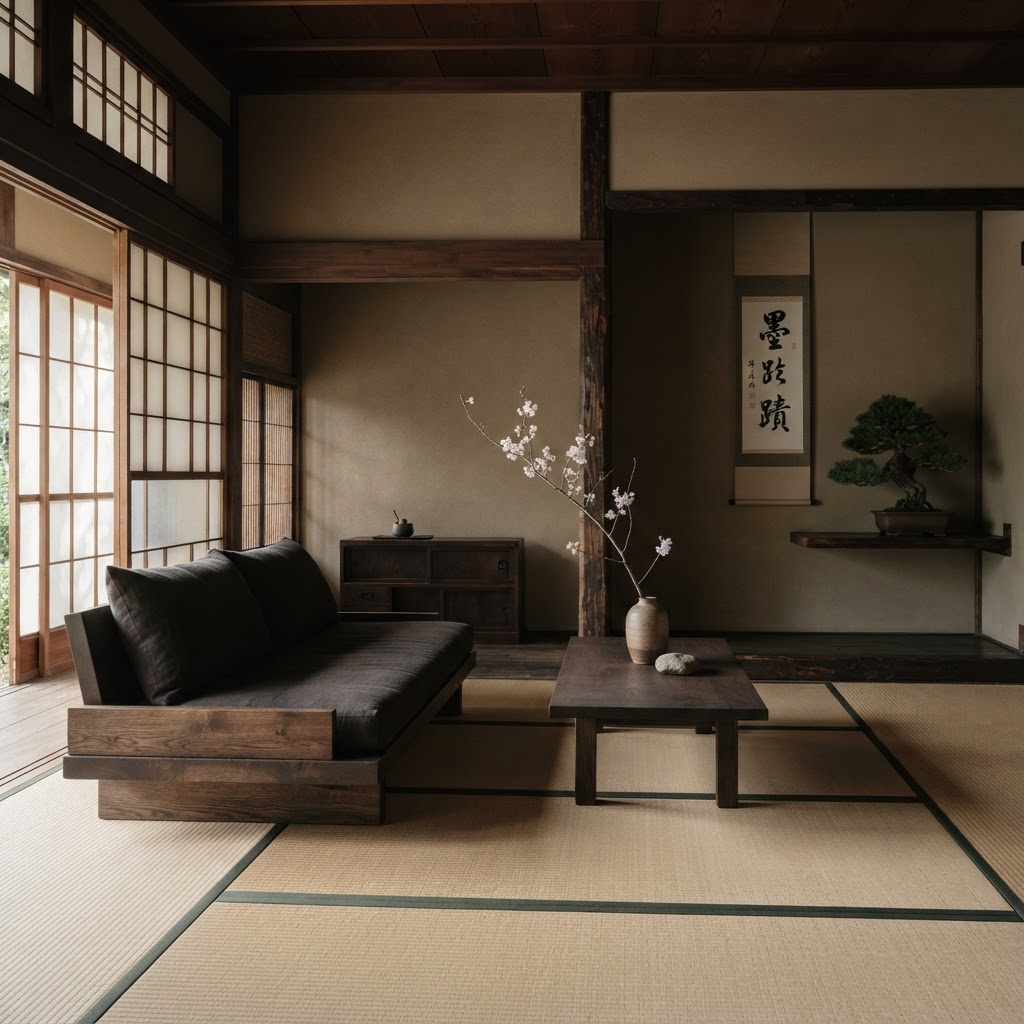
Zen Interior Design
Nordic & Organic
Zen interiors embrace a disciplined, meditative simplicity, balancing raw natural materials and minimalist architectural lines to foster a profound sense of grounded, quiet serenity.
What Defines Zen Style?
Rooted in Japanese traditions and the concepts of Ma and Wabi-Sabi, Zen design prioritizes the beauty of empty space and the honest character of natural materials. This style eschews clutter in favor of a meditative atmosphere, where every element is chosen with intentionality and purpose. By honoring the inherent grain of raw timber and the subtle shifting of light, Zen creates a sanctuary that feels entirely disconnected from the noise of the outside world. It is an aesthetic of subtraction, proving that true luxury resides in the quiet contemplation of the essential.
Key Characteristics
Architecture
The space is defined by clean, uncluttered lines and traditional elements like shoji-style screens that create a seamless flow between the interior and the meditative environment.
Materials
Authenticity is anchored in tactile, raw textures such as dark raw timber, smooth river stone, and integrated tatami mat flooring that celebrate the natural world.
Furniture
Low-profile silhouettes crafted from solid, dark-toned wood promote a sense of grounding and maintain the visual openness required for a meditative, minimalist layout.
Colors
A restrained, monochromatic palette of earthy tones—ranging from warm taupe and soft cream to deep, muted browns—creates a cohesive and calming environment.
Textiles
Textiles are kept purposefully simple and organic, relying on coarse, natural-fiber fabrics like linen to provide subtle depth without introducing unnecessary visual weight or excess.
Lighting
Light is treated as a structural component, filtered through paper-backed screens to create a soft, diffused illumination that highlights the room's quiet, natural surfaces.
Decor
A singular, deliberate focal point—such as a sculpted bonsai or a piece of calligraphy—is used to instill a sense of intention and connection to nature.
Zen Rooms
See how the defining elements of Zen come together in complete interiors.
Look Closer
The materials and details that give Zen its distinctive character.
Signature Pieces
Furniture, lighting and accents that instantly reinforce the Zen look.
See it in Motion
Experience how the space, light and defining details come together in motion.
Zen Color Palette
Zen vs. Similar Styles
Styles can overlap in materials, forms, colors, and architectural details. These comparisons examine the characteristics that distinguish Zen when those signals overlap.
Zen vs. Japandi
Shared DNA
Defining Difference
Zen is defined by an austere, meditative focus on traditional Japanese spatial philosophy, while Japandi is defined by a hybrid comfort-oriented approach that integrates Scandinavian cozy elements and functional utility.
Tie-Breaker
Prioritize the wood tone; if the wood is predominantly light-toned/bleached oak, classify as Japandi, if the wood is darker/raw or aged, classify as Zen.
What Style Is Your Room?
Upload a room photo to discover its decor style, influences, defining characteristics, color palette, and more.
Analyze My Room