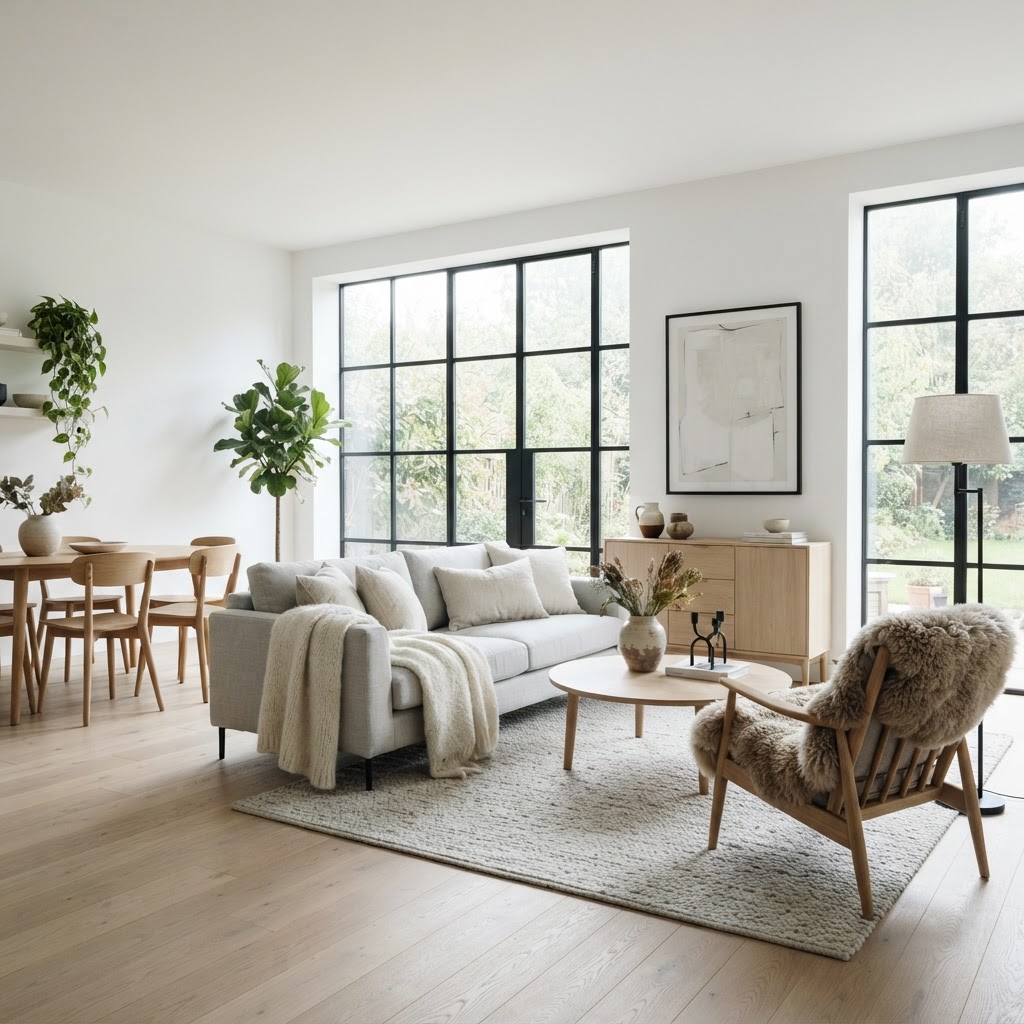
Scandinavian Interior Design
Nordic & Organic
Scandinavian design is a celebration of democratic functionality, combining crisp architectural simplicity with cozy, tactile warmth to create spaces that feel both expansive and profoundly inviting.
What Defines Scandinavian Style?
Born from the harsh northern winters, Scandinavian interiors prize light and utility above all else. The philosophy is rooted in the belief that an unburdened environment fosters personal well-being, utilizing a restrained palette to maximize the reach of soft, natural daylight. By pairing clean, modern lines with the raw beauty of pale woods and textured textiles, the aesthetic avoids superfluous ornamentation in favor of purposeful living. It is a quiet, disciplined approach to home design that prioritizes long-lasting quality and the enduring comfort of hygge, transforming sparse, functional rooms into serene sanctuaries of everyday grace.
Key Characteristics
Architecture
The structural foundation features high-key neutral walls and wide-plank pale oak flooring, often punctuated by dramatic black metal window frames that define the space with sharp, rhythmic edges.
Materials
Designers rely on light, natural woods like ash and beech to provide a foundational warmth that remains understated and harmonious within the bright, airy architectural envelope.
Furniture
Pieces emphasize clean, functional lines and organic silhouettes, frequently elevated on tapered legs to maintain an open flow that preserves the sense of generous negative space.
Colors
A curated palette of cool, crisp whites and soft, muted neutrals serves as the backdrop, intentionally avoiding the heavy, earthy tones found in more rustic or experimental styles.
Textiles
The essential concept of hygge is brought to life through carefully layered, chunky wool blankets, soft knits, and plush sheepskins that offer a deliberate tactile contrast to clean surfaces.
Lighting
Natural light is prioritized through expansive, unadorned glass, allowing diffused daylight to move freely across the interior to enhance the airy and tranquil atmosphere of the home.
Decor
Accessories are sparse and highly intentional, utilizing matte ceramics, sculptural holders, and verdant indoor greenery to provide visual interest without cluttering the minimalist, disciplined composition.
Scandinavian Rooms
See how the defining elements of Scandinavian come together in complete interiors.
Look Closer
The materials and details that give Scandinavian its distinctive character.
Signature Pieces
Furniture, lighting and accents that instantly reinforce the Scandinavian look.
See it in Motion
Experience how the space, light and defining details come together in motion.
Scandinavian Color Palette
Scandinavian vs. Similar Styles
Styles can overlap in materials, forms, colors, and architectural details. These comparisons examine the characteristics that distinguish Scandinavian when those signals overlap.
Scandinavian vs. Japandi
Shared DNA
Defining Difference
Scandinavian design centers on bright, airy white-dominated environments with tapered furniture, while Japandi focuses on earthy, grounded tranquility featuring low-profile furniture and organic, wabi-sabi textures.
Tie-Breaker
Prioritize the elevation of furniture and the color of the primary textile palette; elevated tapered furniture and cool whites favor Scandinavian, while low-profile furniture and earthy neutral textiles favor Japandi.
Scandinavian vs. Organic Modern
Shared DNA
Defining Difference
Scandinavian design is anchored by a crisp, high-contrast white aesthetic with functionalist rigidity, whereas Organic Modern prioritizes earth tones, fluid curves, and textural materiality.
Tie-Breaker
Prioritize the dominance of curvilinear furniture versus geometric, tapered silhouettes; curves favor Organic Modern, while straight, tapered lines favor Scandinavian.
What Style Is Your Room?
Upload a room photo to discover its decor style, influences, defining characteristics, color palette, and more.
Analyze My Room