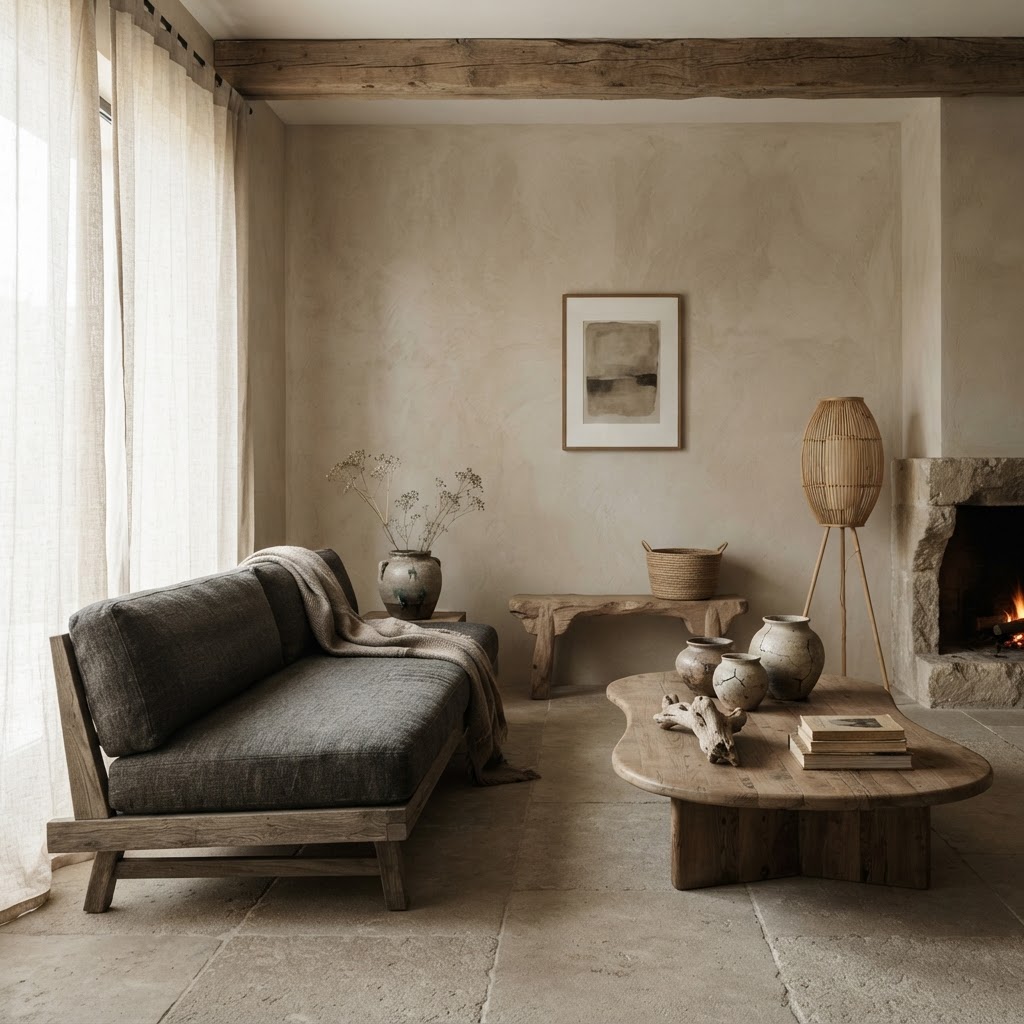
Wabi-Sabi Interior Design
Nordic & Organic
Wabi-Sabi interiors celebrate the quiet, profound beauty of imperfection, utilizing raw, weathered materials and honest, artisanal craftsmanship to honor the natural passage of time.
What Defines Wabi-Sabi Style?
Rooted in Japanese aesthetic tradition, Wabi-Sabi finds elegance in the incomplete and the impermanent. It rejects the sterility of mass production, favoring instead the soulful weight of objects that show their age and history. The design intent is to cultivate a contemplative environment where architectural honesty and tactile depth replace modern polish. By stripping away the unnecessary, these spaces create a grounding stillness that forces us to slow down and appreciate the raw authenticity of our surroundings, transforming the home into a sanctuary of enduring, quiet simplicity.
Key Characteristics
Architecture
The space is defined by structural honesty, featuring hand-troweled plaster walls and rough-hewn stone flooring that celebrate the natural, subtle irregularities of the building process.
Materials
Design elements prioritize raw, natural components like reclaimed timber beams, weathered oak, and unrefined stone to maintain an essentialist connection to the surrounding environment.
Furniture
Essentialist furniture silhouettes rely on low-profile, clean-lined designs crafted from unrefined, primitive timber to highlight the artisanal beauty of hand-wrought construction over mass-produced precision.
Colors
A restricted palette of muted earth tones, ranging from sandy beiges to charcoal grays and soft terracotta, creates a serene atmosphere anchored by natural shadow.
Textiles
Tactile layering is achieved through organic linen window treatments and worn wool textiles, which provide a gentle, matte softness that complements the hard, raw surfaces.
Lighting
Natural light is filtered through sheer, organic fabrics to soften the room, casting gentle shadows that emphasize the varied, textured finishes of the space.
Decor
Curated decor focuses on authenticity, utilizing aged stoneware with visible glazing flaws and dried botanical sprigs to celebrate the beauty of aging and purposeful restraint.
Wabi-Sabi Rooms
See how the defining elements of Wabi-Sabi come together in complete interiors.
Look Closer
The materials and details that give Wabi-Sabi its distinctive character.
Signature Pieces
Furniture, lighting and accents that instantly reinforce the Wabi-Sabi look.
See it in Motion
Experience how the space, light and defining details come together in motion.
Wabi-Sabi Color Palette
Wabi-Sabi vs. Similar Styles
Styles can overlap in materials, forms, colors, and architectural details. These comparisons examine the characteristics that distinguish Wabi-Sabi when those signals overlap.
Wabi-Sabi vs. Rustic Contemporary
Shared DNA
Defining Difference
Wabi-Sabi celebrates the aesthetic beauty of decay, asymmetry, and intentional imperfection, whereas Rustic Contemporary uses natural materials to soften and ground refined, precise, and contemporary architectural forms.
Tie-Breaker
If the room exhibits contemporary clean-lined furniture combined with thriving lush plants, classify as Rustic Contemporary; if the room exhibits primitive/asymmetrical furniture combined with dried flora, classify as Wabi-Sabi.
Wabi-Sabi vs. Belgian Farmhouse
Shared DNA
Defining Difference
Wabi-Sabi centers on the celebration of asymmetry and intentional flaws, whereas Belgian Farmhouse focuses on historical gravitas and comfortable, oversized scale.
Tie-Breaker
If the room features oversized, slipcovered seating, classify as Belgian Farmhouse; if it features delicate or sparse furniture with extreme asymmetry, classify as Wabi-Sabi.
Wabi-Sabi vs. Belgian Modern
Shared DNA
Defining Difference
Wabi-Sabi centers on the celebration of physical imperfection and the passage of time, whereas Belgian Modern emphasizes monochromatic, oversized luxury and structural weight.
Tie-Breaker
If the room contains oversized, upholstered furniture filling the frame, prioritize Belgian Modern; if the room focuses on small, raw, and physically imperfect decor objects, prioritize Wabi-Sabi.
Wabi-Sabi vs. Organic Contemporary
Shared DNA
Defining Difference
Wabi-Sabi centers on the celebration of deliberate imperfection and the passage of time, whereas Organic Contemporary prioritizes the fusion of modern architectural precision with organic, tactile warmth.
Tie-Breaker
Prioritize the presence of 'flaw' versus 'finish': if textures prioritize raw, unrefined decay, favor Wabi-Sabi; if they prioritize smooth, polished architectural sophistication, favor Organic Contemporary.
What Style Is Your Room?
Upload a room photo to discover its decor style, influences, defining characteristics, color palette, and more.
Analyze My Room