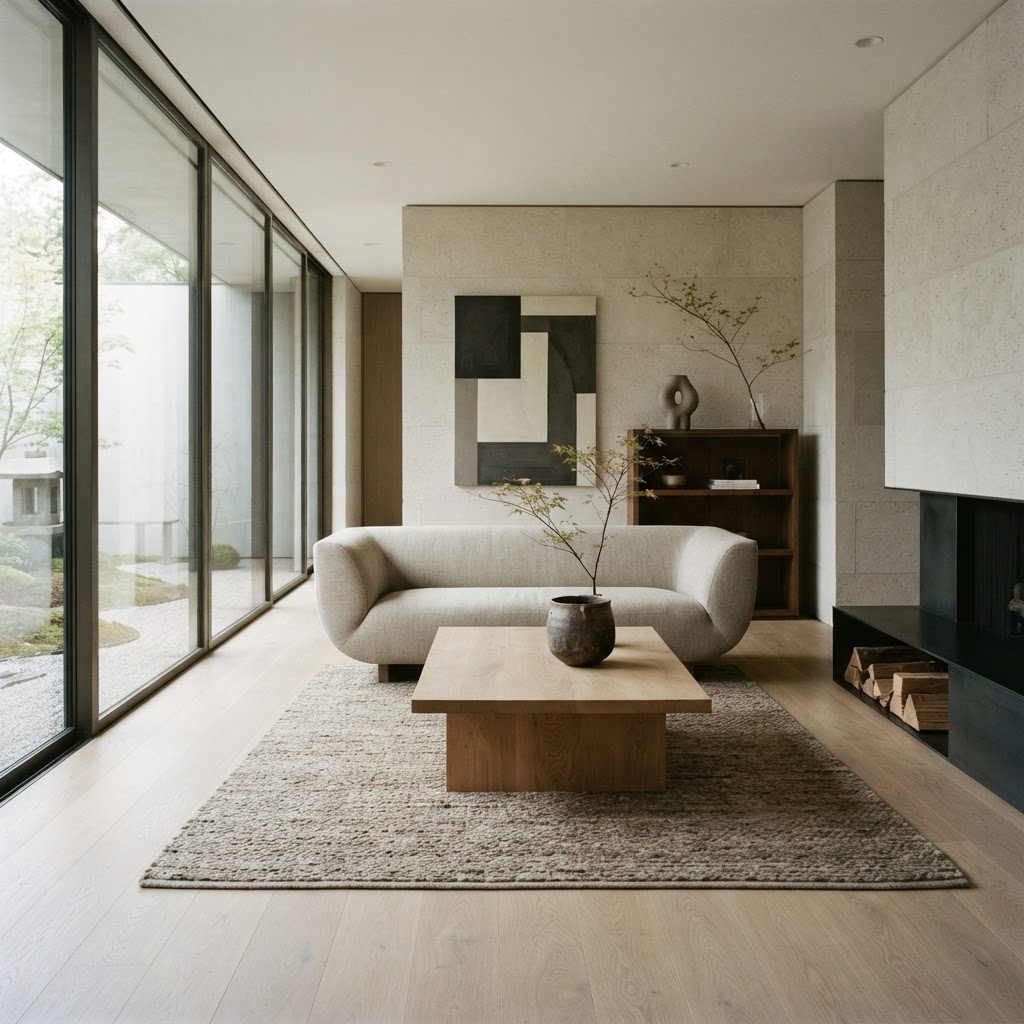
Japandi Luxury Interior Design
Nordic & Organic
Japandi Luxury is a refined architectural synthesis of Scandinavian functionality and Japanese wabi-sabi minimalism, defined by high-end natural materials, deliberate negative space, and quiet, tactile sophistication.
What Defines Japandi Luxury Style?
Rooted in the marriage of Nordic practicality and Japanese craftsmanship, Japandi Luxury elevates the humblest elements of nature into a curated, meditative environment. This style rejects excess in favor of a balanced ratio of uncluttered volume to intentional structural focus, prizing the beauty of imperfect, raw materials against precise geometric lines. It is an aesthetic of restraint where every object, from a solitary sculptural branch to a piece of abstract art, is placed with purpose. The intent is to create a home that feels both grounded in earthy authenticity and polished to a standard of quiet, lasting luxury.
Key Characteristics
Architecture
The space is defined by expansive, uncluttered volumes featuring clean lines and a structural balance that prioritizes negative space over ornamental detail.
Materials
Authenticity is established through a juxtaposition of premium wide-plank white oak, honed limestone, and large-format stone cladding that grounds the room in natural, tactile luxury.
Furniture
Furniture archetypes favor low-slung, organic silhouettes and sculptural curved seating crafted from solid wood to emphasize both functionality and artisanal quality.
Colors
The palette relies on a sophisticated tonal base of off-white lime wash and soft beige, punctuated by high-contrast accents like matte dark metal fireplace inserts.
Textiles
Heavy-weave linens provide organic softness to the interior, creating an inviting, layered depth that complements the harder surfaces of stone and timber.
Lighting
Natural light is filtered through floor-to-ceiling windows or shoji-inspired screens to create a soft, diffuse glow that maintains the room's serene and meditative atmosphere.
Decor
Singular botanical elements like bonsai or ikebana-inspired branches are paired with monochromatic, abstract art to foster a sense of serene, deliberate flow.
Japandi Luxury Rooms
See how the defining elements of Japandi Luxury come together in complete interiors.
Look Closer
The materials and details that give Japandi Luxury its distinctive character.
Signature Pieces
Furniture, lighting and accents that instantly reinforce the Japandi Luxury look.
See it in Motion
Experience how the space, light and defining details come together in motion.
Japandi Luxury Color Palette
Japandi Luxury vs. Similar Styles
Styles can overlap in materials, forms, colors, and architectural details. These comparisons examine the characteristics that distinguish Japandi Luxury when those signals overlap.
Japandi Luxury vs. Japandi
Shared DNA
Defining Difference
Japandi Luxury is defined by the infusion of high-status geological materials like limestone and travertine, whereas standard Japandi prioritizes accessible, cozy, and rustic tactile elements like rattan, bamboo, and crumpled linen.
Tie-Breaker
If both high-end stone finishes and paper/rattan elements appear, classify based on the flooring material: limestone and polished plaster favor Japandi Luxury, while light-toned wood planks favor Japandi.
Japandi Luxury vs. Organic Contemporary
Shared DNA
Defining Difference
Japandi Luxury is defined by intentional, sparse austerity and structural precision, whereas Organic Contemporary prioritizes softness, warmth, and an explicit biophilic connection to nature.
Tie-Breaker
Prioritize the presence of lush greenery; if the space features oversized potted plants or cascading vines, it is definitively Organic Contemporary, regardless of the architectural minimalism.
What Style Is Your Room?
Upload a room photo to discover its decor style, influences, defining characteristics, color palette, and more.
Analyze My Room