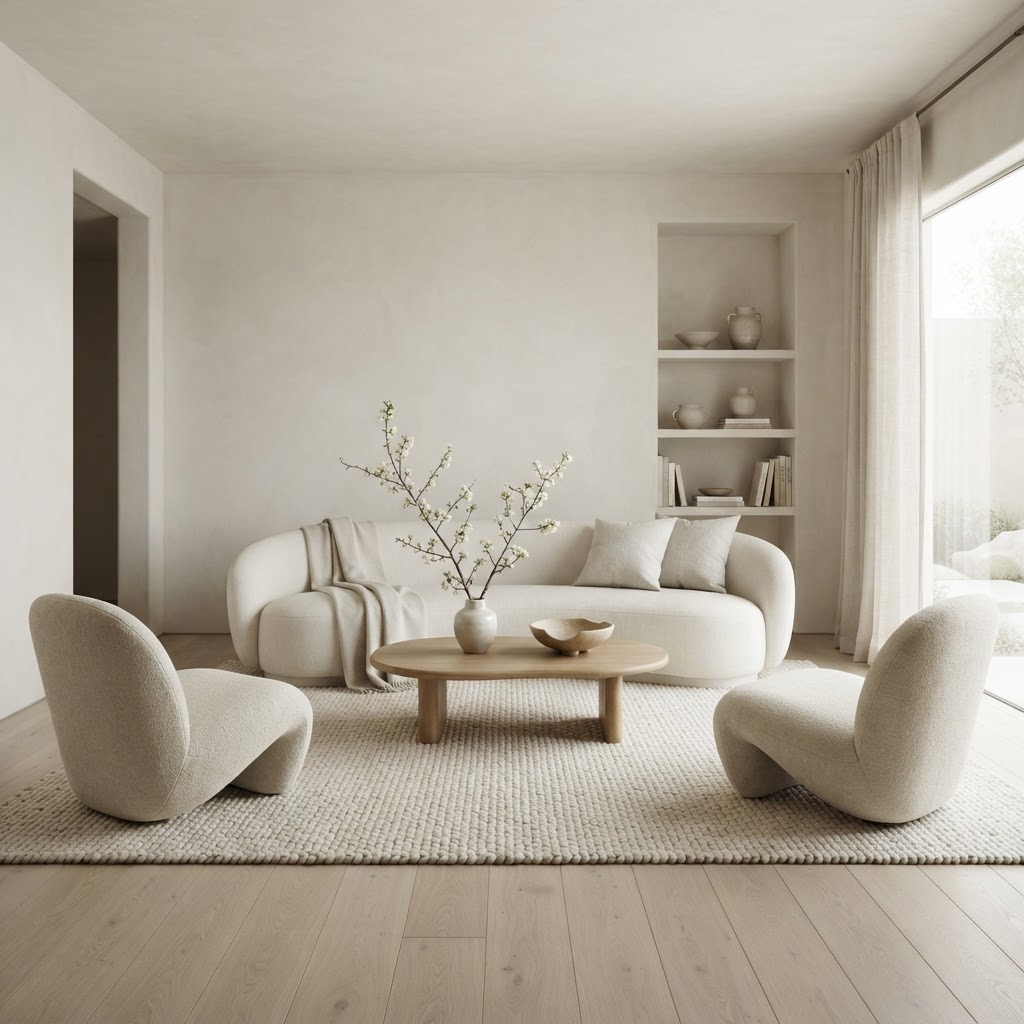
Warm Minimalism Interior Design
Modern & Minimal
Warm Minimalism is the intentional synthesis of reductive architectural space and organic, tactile comfort, creating a serene environment grounded in creamy neutrals and natural materials.
What Defines Warm Minimalism Style?
Emerging as a sensory-focused evolution of classic minimalism, this style rejects the cold austerity of traditional modernism in favor of an inviting, monochromatic stillness. It prizes the deliberate curation of space, where the absence of clutter allows the quality of natural grains and matte textures to command attention. By softening clean architectural lines with organic curves and warmth, the aesthetic fosters a quiet, restorative atmosphere that feels both expansive and deeply intimate. It is less about the items you acquire and more about the peaceful, breathable silence maintained between the objects you choose to keep.
Key Characteristics
Architecture
The space is defined by a restrained, clean envelope featuring smooth plaster-effect walls and broad, unadorned planes that maximize a sense of intentional negative space.
Materials
Foundational elements emphasize the raw beauty of wide-plank white oak flooring, matte plaster finishes, and tactile natural grains that provide warmth without visual noise.
Furniture
Selected pieces favor subtle, organic curves and minimalist silhouettes over harsh geometric edges, ensuring each item serves a clear purpose while contributing to a fluid, uncluttered layout.
Colors
A monochromatic palette of creamy whites, soft sands, and muted earth tones creates a cohesive, uniform backdrop that encourages a peaceful and serene living experience.
Textiles
Cozy, tactile layers including heavy-weight linen upholstery, textured bouclé, and chunky hand-woven wool rugs add depth and physical comfort to the otherwise sparse, neutral setting.
Lighting
The environment relies on soft, diffused illumination that celebrates the gentle interplay of shadow and light across expansive surfaces rather than using harsh direct sources.
Decor
Refined curation is limited to a small, thoughtful collection of artisan-made ceramic vessels, sculptural wooden bowls, and lush greenery that break the stillness with organic life.
Warm Minimalism Rooms
See how the defining elements of Warm Minimalism come together in complete interiors.
Look Closer
The materials and details that give Warm Minimalism its distinctive character.
Signature Pieces
Furniture, lighting and accents that instantly reinforce the Warm Minimalism look.
See it in Motion
Experience how the space, light and defining details come together in motion.
Warm Minimalism Color Palette
Warm Minimalism vs. Similar Styles
Styles can overlap in materials, forms, colors, and architectural details. These comparisons examine the characteristics that distinguish Warm Minimalism when those signals overlap.
Warm Minimalism vs. New Nordic
Shared DNA
Defining Difference
New Nordic is defined by straight-lined, elevated furniture geometry and cool-toned restraint, whereas Warm Minimalism relies on low-profile, soft organic curves and a creamy, monochromatic warmth.
Tie-Breaker
Prioritize the silhouette of the primary seating: if furniture is low-profile and rounded, classify as Warm Minimalism; if elevated with tapered legs and straight lines, classify as New Nordic.
Warm Minimalism vs. Italian Contemporary
Shared DNA
Defining Difference
Italian Contemporary focuses on architectural precision and high-contrast, polished luxury, whereas Warm Minimalism focuses on organic softness and a muted, earthy monochromatic envelope.
Tie-Breaker
Prioritize the presence of high-gloss reflective surfaces and sharp geometry for Style A, versus the presence of matte plaster and organic curves for Style B.
Warm Minimalism vs. Organic Modern
Shared DNA
Defining Difference
Warm Minimalism prioritizes stark, monochromatic architectural simplicity with a focus on void space, whereas Organic Modern prioritizes the layering of raw, heavy-textured materials like stone and clay to mimic an earth-bound, more tactile environment.
Tie-Breaker
If both are present, prioritize the primary material surface: if smooth plaster dominates, classify as Warm Minimalism; if travertine or rough-hewn stone surfaces dominate, classify as Organic Modern.
What Style Is Your Room?
Upload a room photo to discover its decor style, influences, defining characteristics, color palette, and more.
Analyze My Room