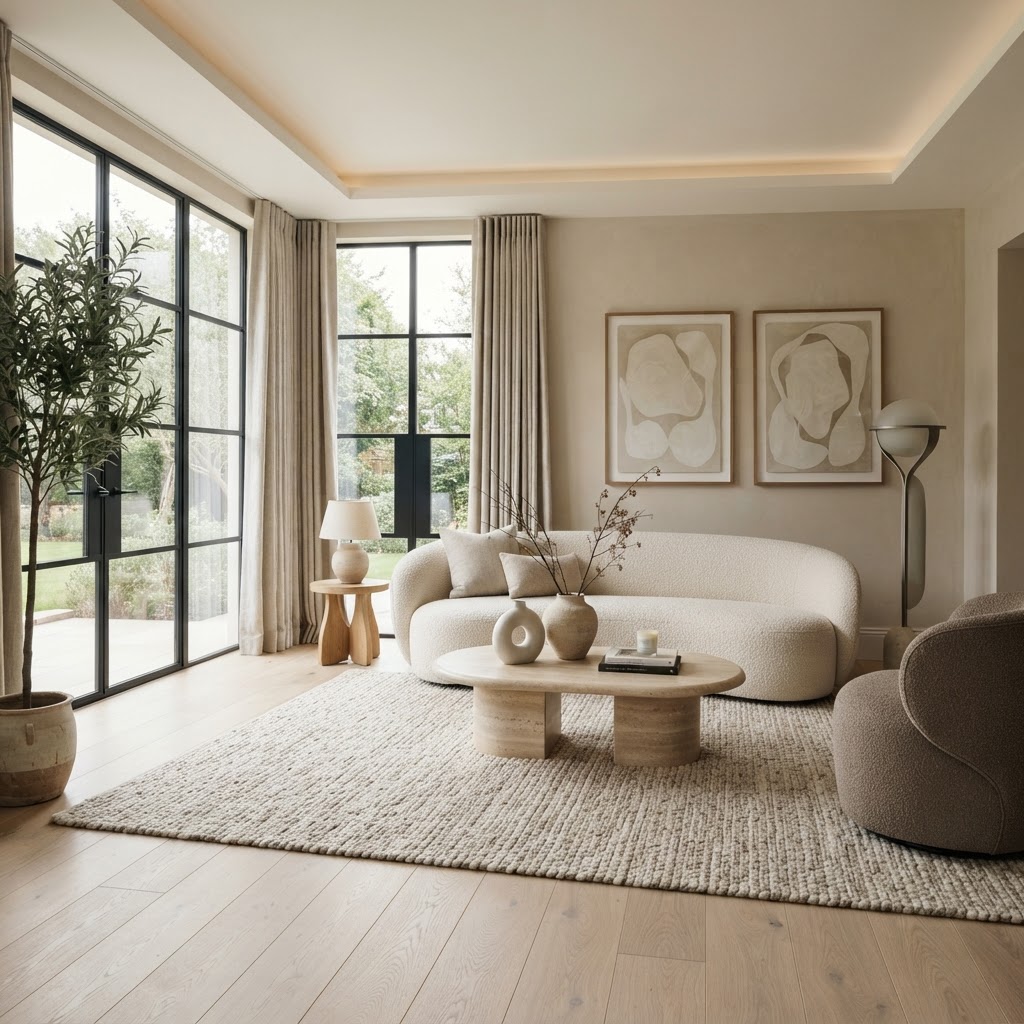
Contemporary Interior Design
Modern & Minimal
Contemporary design is defined by an architectural interplay of clean, expansive lines softened by organic silhouettes and a curated, tactile approach to warm, monochromatic living.
What Defines Contemporary Style?
Contemporary design evolves from a desire to reconcile the crispness of modern structuralism with the inherent need for human comfort. It rejects the cold austerity of traditional minimalism, opting instead for a fluid harmony between architectural order and organic warmth. By prioritizing intentional negative space and artisanal materiality, the style seeks to create an environment that feels both sophisticated and inherently liveable. The intent is to craft a sanctuary where refined, low-profile forms and soft, tonal layers create an atmosphere of effortless tranquility, moving beyond fleeting trends to embrace a balanced, modern serenity.
Key Characteristics
Architecture
Spacious layouts emphasize structural clarity through large, unadorned windows that invite natural light to interact with wide-plank light oak flooring or polished concrete surfaces.
Materials
The palette draws from the earth, favoring the tactile authenticity of honed travertine stone, matte-finished woods, and plaster-like wall finishes that provide subtle, sophisticated depth.
Furniture
Low-profile, sculptural pieces feature fluid, organic curves that soften the room's hard edges while maintaining an airy, minimalist aesthetic that feels intentionally curated.
Colors
A serene base of warm neutrals, including sand, ecru, and soft taupe, creates a seamless monochromatic layering that emphasizes architectural depth through subtle tonal shifts.
Textiles
Rich, sensory comfort is achieved through a tapestry of tactile fabrics, utilizing the plush depth of bouclé, brushed velvet, and heavy-weight linen for intimacy.
Lighting
Lighting acts as a subtle design element, with integrated, diffused cove illumination casting a gentle glow, complemented by statement fixtures in restrained, matte metal finishes.
Decor
Surface styling is kept to a restrained minimum, featuring artisanal ceramic vessels, abstract sculptural objects, and greenery with elegant, slender silhouettes to provide organic movement.
Contemporary Rooms
See how the defining elements of Contemporary come together in complete interiors.
Look Closer
The materials and details that give Contemporary its distinctive character.
Signature Pieces
Furniture, lighting and accents that instantly reinforce the Contemporary look.
See it in Motion
Experience how the space, light and defining details come together in motion.
Contemporary Color Palette
Contemporary vs. Similar Styles
Styles can overlap in materials, forms, colors, and architectural details. These comparisons examine the characteristics that distinguish Contemporary when those signals overlap.
Contemporary vs. Nordic Modern
Shared DNA
Defining Difference
Nordic Modern relies on rigid, clean-lined structural geometry and a cool-to-neutral palette, whereas Contemporary prioritizes soft, organic, and fluid furniture curves set against a warmer, monochromatic layered background.
Tie-Breaker
Prioritize the shape of the primary seating furniture: if edges are sharp and structural, lean Nordic Modern; if edges are curved or pill-shaped, lean Contemporary.
Contemporary vs. New Nordic
Shared DNA
Defining Difference
New Nordic is defined by straight-lined, high-profile geometry and cool-toned minimalism, whereas Contemporary is defined by organic, curved silhouettes and warm, layered neutral monochromaticism.
Tie-Breaker
Prioritize the shape of the primary seating; if the sofa or chairs have visible curves or rounded corners, classify as Contemporary regardless of color palette.
What Style Is Your Room?
Upload a room photo to discover its decor style, influences, defining characteristics, color palette, and more.
Analyze My Room