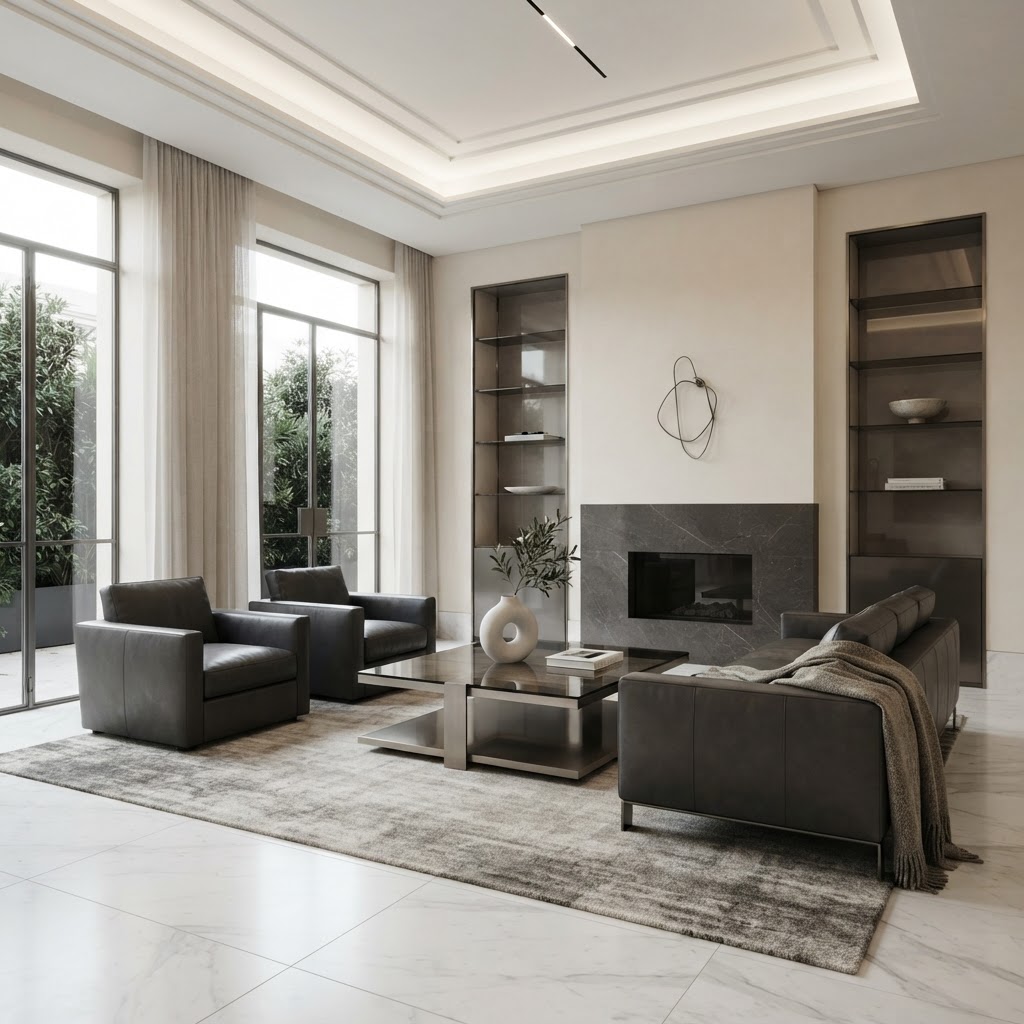
Italian Contemporary Interior Design
Modern & Minimal
Italian Contemporary interiors define luxury through a rigorous synthesis of clean, geometric architectural forms, premium refined materials, and an unwavering commitment to spatial fluidity and understated sophistication.
What Defines Italian Contemporary Style?
Rooted in Italy’s rich lineage of modernist design, Italian Contemporary moves beyond mere minimalism to embrace an intellectual, highly curated approach to volume and light. The philosophy prizes architectural precision, favoring sharp lines and balanced silhouettes that allow the intrinsic quality of premium materials to take center stage. By prioritizing clarity over ornamentation, the style creates a serene, monochromatic sanctuary that feels both structurally significant and deeply comfortable. It is an aesthetic of deliberate restraint, where every element—from the sweep of a marble floor to the placement of a single metal fixture—is calculated to evoke timeless, effortless elegance.
Key Characteristics
Architecture
Design centers on high, coffered ceilings and floor-to-ceiling glass apertures that prioritize spatial fluidity and allow for a seamless transition between interior volumes and natural illumination.
Materials
Foundations rely on the refined pairing of expansive, polished large-format marble flooring, smoked glass, and brushed metal to establish a sophisticated, high-end sensory backdrop.
Furniture
Archetypes emphasize clean, geometric silhouettes featuring structured, low-slung full-grain leather seating that balances ergonomic comfort with a sharp, sculptural presence.
Colors
The palette remains strictly neutral and monochromatic, utilizing a layered spectrum of creams, warm greys, and deep charcoals to maintain visual cohesion and high-contrast elegance.
Textiles
Tactile layering is achieved through intentional additions like heavy wool throws and hand-tufted silk rugs, which soften the streamlined surfaces without sacrificing a refined finish.
Lighting
Integrated architectural lighting, specifically recessed coves and minimalist linear fixtures, is used as a primary structural tool to carve out precise volumes of shadow and light.
Decor
Decorative accents are kept sparse and highly intentional, favoring singular sculptural ceramic vases, abstract metal art, and organic botanicals that introduce life to the disciplined environment.
Italian Contemporary Rooms
See how the defining elements of Italian Contemporary come together in complete interiors.
Look Closer
The materials and details that give Italian Contemporary its distinctive character.
Signature Pieces
Furniture, lighting and accents that instantly reinforce the Italian Contemporary look.
See it in Motion
Experience how the space, light and defining details come together in motion.
Italian Contemporary Color Palette
Italian Contemporary vs. Similar Styles
Styles can overlap in materials, forms, colors, and architectural details. These comparisons examine the characteristics that distinguish Italian Contemporary when those signals overlap.
Italian Contemporary vs. Luxe Contemporary
Shared DNA
Defining Difference
Luxe Contemporary prioritizes high-gloss polish and artisanal metal ornamentation for a boutique-hotel aesthetic, whereas Italian Contemporary favors matte finishes, organic textiles, and strict geometric precision focused on heirloom craftsmanship.
Tie-Breaker
Prioritize the finish of the primary furniture and drapery material; high-gloss/silk indicates Luxe Contemporary, while matte/linen indicates Italian Contemporary.
Italian Contemporary vs. Warm Minimalism
Shared DNA
Defining Difference
Italian Contemporary focuses on architectural precision and high-contrast, polished luxury, whereas Warm Minimalism focuses on organic softness and a muted, earthy monochromatic envelope.
Tie-Breaker
Prioritize the presence of high-gloss reflective surfaces and sharp geometry for Style A, versus the presence of matte plaster and organic curves for Style B.
Italian Contemporary vs. Contemporary Luxury
Shared DNA
Defining Difference
Italian Contemporary prioritizes architectural heritage and matte, tactile materiality for intellectual warmth, whereas Contemporary Luxury prioritizes high-gloss polish, grand-scale drama, and metallic sheen for status-driven exclusivity.
Tie-Breaker
Prioritize the lighting fixture category; if the room features a large decorative chandelier, categorize as Style B, while recessed, hidden, or linear architectural lighting points to Style A.
What Style Is Your Room?
Upload a room photo to discover its decor style, influences, defining characteristics, color palette, and more.
Analyze My Room