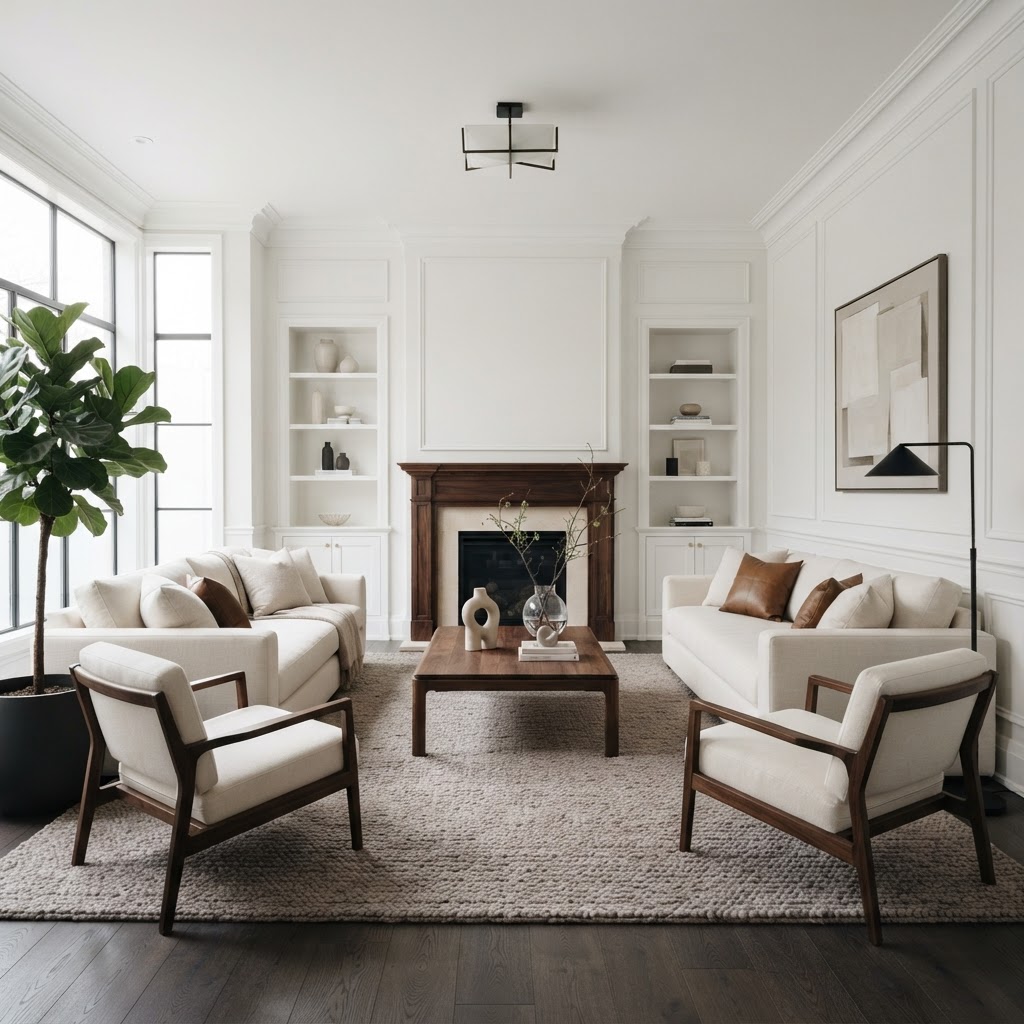
Transitional Interior Design
Modern & Minimal
Transitional design harmonizes the warmth of classic architectural heritage with the refined, clean-lined simplicity of modern living to create a balanced, serene, and timeless domestic environment.
What Defines Transitional Style?
Transitional design serves as the sophisticated bridge between the storied elegance of traditional interiors and the purposeful minimalism of contemporary life. It rejects the heavy ornamentation of the past while avoiding the cold austerity of modernism, favoring instead a curated equilibrium of form and function. By marrying historical architectural foundations with current, streamlined silhouettes, the style cultivates an atmosphere of intentional calm. This aesthetic prizes architectural serenity and refined comfort, resulting in a lived-in space that feels both impeccably polished and invitingly grounded.
Key Characteristics
Architecture
The foundation centers on historical elements like crown molding and formal wall paneling, which provide a graceful, structured framework for contemporary design choices.
Materials
A focus on premium, tactile materials such as warm walnut wood, cool stone, and polished brass adds layers of depth and subtle luxury to the home.
Furniture
Silhouettes are carefully chosen to balance traditional curved forms with the sleek, straight-edged profiles of modern, low-profile designs for a harmonious visual flow.
Colors
A restrained, monochromatic palette of warm whites, soft grays, and muted taupes establishes a tranquil backdrop that allows the room's sculptural details to shine.
Textiles
Tactile, sophisticated fabrics like nubby linens, supple leathers, and thick wool rugs are layered throughout to bring warmth and understated character to the neutral canvas.
Lighting
Soft, diffused, and naturalistic light sources are strategically placed to ensure the atmosphere remains airy, polished, and invitingly lived-in throughout the day and evening.
Decor
Minimalist ceramic sculptures, monochromatic abstract art, and lush, architectural greenery provide intellectual interest without ever compromising the room's serene and uncluttered aesthetic.
Transitional Rooms
See how the defining elements of Transitional come together in complete interiors.
Look Closer
The materials and details that give Transitional its distinctive character.
Signature Pieces
Furniture, lighting and accents that instantly reinforce the Transitional look.
See it in Motion
Experience how the space, light and defining details come together in motion.
Transitional Color Palette
Transitional vs. Similar Styles
Styles can overlap in materials, forms, colors, and architectural details. These comparisons examine the characteristics that distinguish Transitional when those signals overlap.
Transitional vs. Rustic Farmhouse
Shared DNA
Defining Difference
Rustic Farmhouse relies on raw, weathered, and artisan-crafted textures to evoke a heritage country feel, whereas Transitional balances clean-lined, polished modernism with traditional architectural refinement.
Tie-Breaker
Prioritize the finish of the woodwork; if it is weathered or reclaimed, default to Rustic Farmhouse, whereas high-polish or refined millwork strongly indicates Transitional.
Transitional vs. Modern Colonial
Shared DNA
Defining Difference
Modern Colonial prioritizes specific historical heritage motifs and period-accurate architecture, while Transitional prioritizes a fluid, comfort-driven mix of contemporary profiles and traditional forms.
Tie-Breaker
Prioritize the provenance of the furniture silhouettes; if the furniture is clearly rooted in a specific historical style (Colonial), classify as Modern Colonial regardless of neutral colors.
Transitional vs. Light Academia
Shared DNA
Defining Difference
Light Academia is rooted in scholarly, antique-curated nostalgia, whereas Transitional is a polished, symmetrical fusion of traditional architectural heritage and modern minimalism.
Tie-Breaker
If a space is perfectly symmetrical and features decorative wall millwork, classify it as Transitional regardless of the presence of books or academic objects.
Transitional vs. American Traditional
Shared DNA
Defining Difference
American Traditional prioritizes historical fidelity and ornate detailing, whereas Transitional prioritizes the reduction of ornate excess to favor clean-lined, modern silhouettes.
Tie-Breaker
Prioritize the furniture silhouette; if shapes feature complex curves and carvings it is Style A, whereas smooth, minimalist profiles indicate Style B.
Transitional vs. Parisian
Shared DNA
Defining Difference
Transitional style relies on a balanced, symmetrical approach to clean-lined modernism and comfort, whereas Parisian style is defined by its architectural heritage, utilizing specific historic flooring and ornate plasterwork as the primary focal point of the room.
Tie-Breaker
If herringbone flooring and intricate plaster moldings are present, classify as Parisian regardless of the furniture style.
Transitional vs. Organic Modern
Shared DNA
Defining Difference
Transitional style creates balance through the marriage of formal, traditional architectural history with modern elements, whereas Organic Modern prioritizes raw, elemental nature and fluid, contemporary architectural silhouettes.
Tie-Breaker
If both styles are present, evaluate the architecture; if it includes period-style millwork it is Transitional, if it relies on raw stone and light oak textures, it is Organic Modern.
What Style Is Your Room?
Upload a room photo to discover its decor style, influences, defining characteristics, color palette, and more.
Analyze My Room