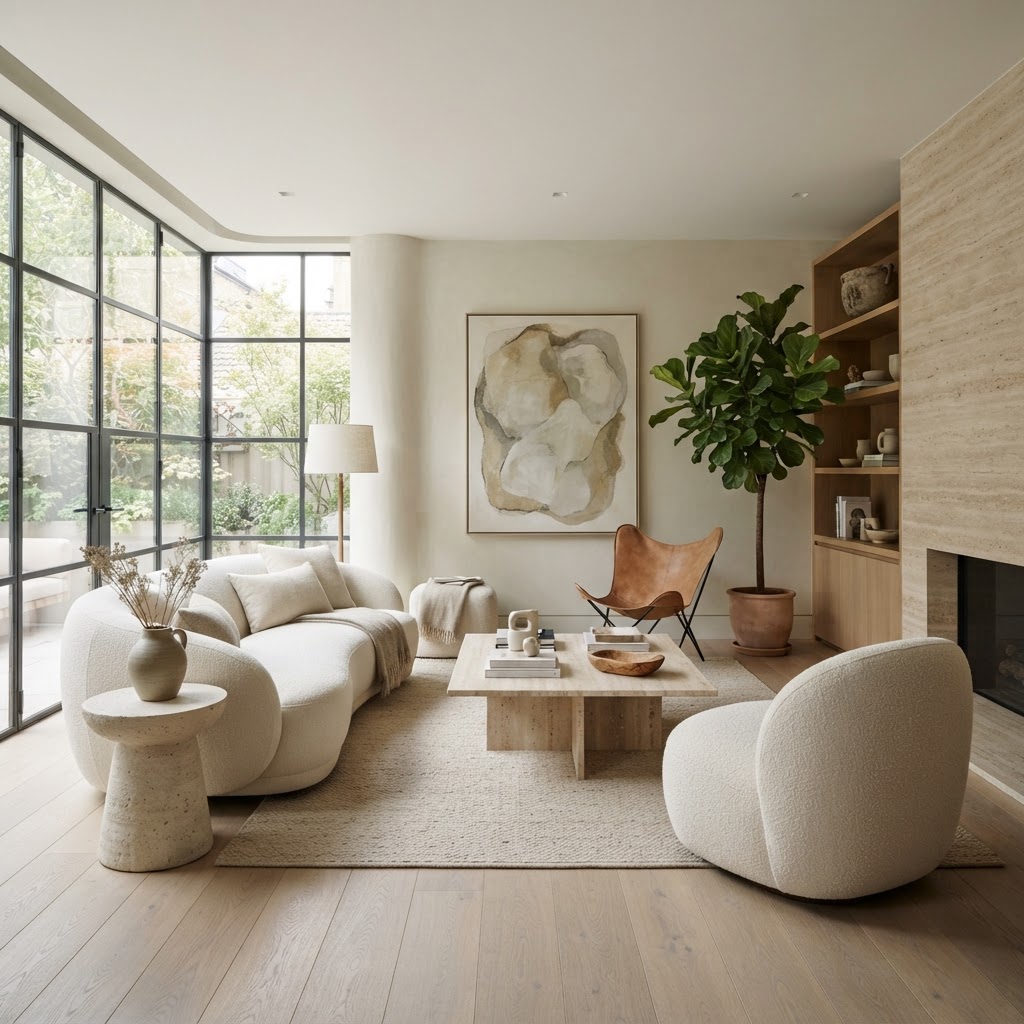
Organic Modern Interior Design
Modern & Minimal
Organic Modern blends contemporary architectural precision with the raw, tactile beauty of the natural world to create spaces that feel both highly curated and effortlessly grounded.
What Defines Organic Modern Style?
Born from a desire to reconcile sleek modernism with the calming influence of the outdoors, Organic Modern prioritizes intentional living through a refined lens. It moves away from the stark sterility of traditional minimalism, instead favoring fluid lines and authentic textures that invite a sense of repose. The aesthetic intent is to create a sanctuary where every piece feels essential, balancing sculptural design with raw materials. By stripping back clutter and focusing on the interplay of light and shadow, the style fosters an atmosphere of quiet sophistication, ensuring that every home feels deeply connected to the natural environment.
Key Characteristics
Architecture
Contemporary structural lines are softened by fluid curves and grand, steel-framed windows that maximize natural light while framing the surrounding landscape.
Materials
The foundation rests on honest, earthy elements such as wide-plank light oak flooring and honed natural stones like travertine or limestone for a grounded aesthetic.
Furniture
Sculptural pieces with minimalist profiles and intentionally curvilinear silhouettes serve as focal points that balance architectural volume with an inviting, soft form.
Colors
A serene, neutral palette dominated by warm sand, soft stone, and creamy beige creates a balanced backdrop that prioritizes an airy and uncluttered visual flow.
Textiles
Comfort is achieved through a tactile assembly of raw, heavy-weave linens and plush, low-profile upholstery that adds depth and warmth to the minimalist environment.
Lighting
Natural light is treated as a primary design element, washing over matte surfaces to emphasize the architectural volume and the play of shadow throughout the day.
Decor
Curated artisanal ceramics, abstract organic wall art, and large-scale indoor greenery replace traditional clutter to maintain a biophilic connection to the outdoors.
Organic Modern Rooms
See how the defining elements of Organic Modern come together in complete interiors.
Look Closer
The materials and details that give Organic Modern its distinctive character.
Signature Pieces
Furniture, lighting and accents that instantly reinforce the Organic Modern look.
See it in Motion
Experience how the space, light and defining details come together in motion.
Organic Modern Color Palette
Organic Modern vs. Similar Styles
Styles can overlap in materials, forms, colors, and architectural details. These comparisons examine the characteristics that distinguish Organic Modern when those signals overlap.
Organic Modern vs. Coastal Contemporary
Shared DNA
Defining Difference
Coastal Contemporary emphasizes a linear, architectural framing inspired by the horizon and cool, sea-toned accents, whereas Organic Modern prioritizes fluid, curvilinear silhouettes and warm, raw earthen textures.
Tie-Breaker
Prioritize the shape of the primary furniture (sofa/coffee table); rounded curves indicate Organic Modern, while sharp, linear frames indicate Coastal Contemporary.
Organic Modern vs. Warm Minimalism
Shared DNA
Defining Difference
Warm Minimalism prioritizes stark, monochromatic architectural simplicity with a focus on void space, whereas Organic Modern prioritizes the layering of raw, heavy-textured materials like stone and clay to mimic an earth-bound, more tactile environment.
Tie-Breaker
If both are present, prioritize the primary material surface: if smooth plaster dominates, classify as Warm Minimalism; if travertine or rough-hewn stone surfaces dominate, classify as Organic Modern.
Organic Modern vs. Tropical
Shared DNA
Defining Difference
Tropical style centers on a breezy, vacation-inspired atmosphere using casual, woven fibers, while Organic Modern centers on a curated, architectural stillness using heavy stone and intentional, sculptural silhouettes.
Tie-Breaker
Prioritize the material of the primary furniture: rattan/bamboo indicates Tropical, while stone/heavy linen/sculptural shapes indicate Organic Modern.
Organic Modern vs. Transitional
Shared DNA
Defining Difference
Transitional style creates balance through the marriage of formal, traditional architectural history with modern elements, whereas Organic Modern prioritizes raw, elemental nature and fluid, contemporary architectural silhouettes.
Tie-Breaker
If both styles are present, evaluate the architecture; if it includes period-style millwork it is Transitional, if it relies on raw stone and light oak textures, it is Organic Modern.
Organic Modern vs. Scandinavian
Shared DNA
Defining Difference
Scandinavian design is anchored by a crisp, high-contrast white aesthetic with functionalist rigidity, whereas Organic Modern prioritizes earth tones, fluid curves, and textural materiality.
Tie-Breaker
Prioritize the dominance of curvilinear furniture versus geometric, tapered silhouettes; curves favor Organic Modern, while straight, tapered lines favor Scandinavian.
What Style Is Your Room?
Upload a room photo to discover its decor style, influences, defining characteristics, color palette, and more.
Analyze My Room