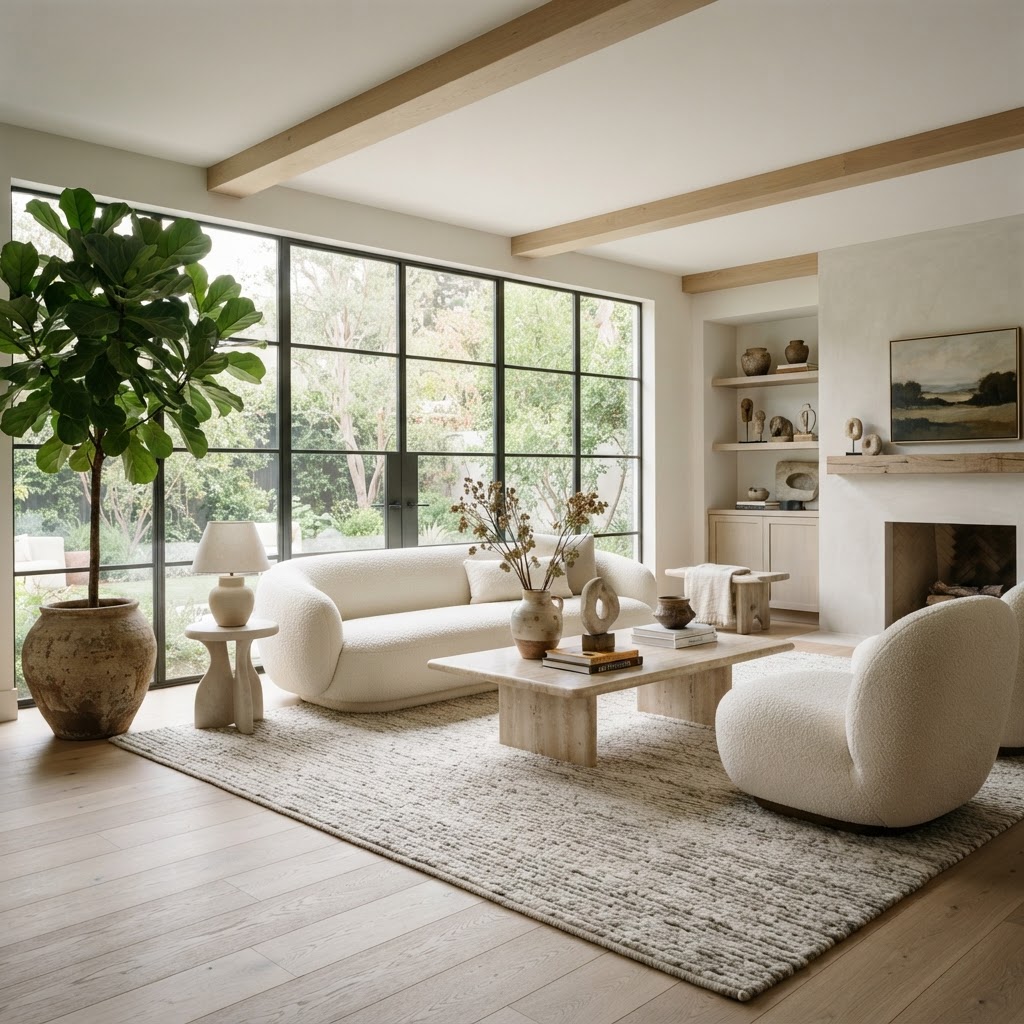
Organic Contemporary Interior Design
Modern & Minimal
Organic Contemporary is a deliberate marriage of clean-lined modern architecture and raw, natural textures, creating a space that feels both highly refined and inherently grounded.
What Defines Organic Contemporary Style?
Born from a desire to reconcile the sterility of modern minimalism with the soothing presence of the natural world, Organic Contemporary prioritizes equilibrium. It rejects rigid geometry in favor of soft, sculptural forms and an earthy, restrained palette. The philosophy centers on intentionality, where every element—from the grain of reclaimed oak to the curve of a stone sculpture—is chosen to evoke serenity. By balancing light, open architecture with rich, tactile surfaces, the style achieves a sophisticated warmth that feels effortlessly lived-in, ensuring the home functions as a peaceful sanctuary against the pace of modern life.
Key Characteristics
Architecture
The foundation features clean-lined modern structures, often utilizing vaulted or flat ceilings and expansive windows to foster a seamless, airy connection with the outdoors.
Materials
Designers prioritize raw, tactile finishes such as polished travertine, unfinished oak, and hand-spun ceramics that emphasize the inherent beauty of unrefined, natural elements.
Furniture
Low-profile, sculptural silhouettes dominate, with curvilinear shapes providing comfort and artistic interest while avoiding the harshness of traditional geometric furniture lines.
Colors
The palette remains strictly within a monochromatic, warm neutral spectrum, utilizing shades of cream, greige, and soft terracotta to maintain a cohesive, balanced atmosphere.
Textiles
Layering is essential, featuring soft bouclé upholstery, raw linens, and hand-woven wool rugs that provide necessary tactile depth to the refined modern surroundings.
Lighting
Spaces emphasize diffused, natural light filtered through expansive glazing, creating a soft, ethereal quality that highlights the texture and form of every interior element.
Decor
Curated accents like abstract stone sculptures, artisanal stoneware, and oversized botanical elements bring a sense of organic vitality without ever feeling cluttered or decorative.
Organic Contemporary Rooms
See how the defining elements of Organic Contemporary come together in complete interiors.
Look Closer
The materials and details that give Organic Contemporary its distinctive character.
Signature Pieces
Furniture, lighting and accents that instantly reinforce the Organic Contemporary look.
See it in Motion
Experience how the space, light and defining details come together in motion.
Organic Contemporary Color Palette
Organic Contemporary vs. Similar Styles
Styles can overlap in materials, forms, colors, and architectural details. These comparisons examine the characteristics that distinguish Organic Contemporary when those signals overlap.
Organic Contemporary vs. Soft Minimalism
Shared DNA
Defining Difference
Soft Minimalism focuses on reductive, monolithic restraint and monochromatic simplicity, whereas Organic Contemporary prioritizes high-contrast textural layering, specific artisanal stone surfaces, and significant biophilic volume.
Tie-Breaker
Prioritize the presence of heavy-texture materials like bouclé and travertine as the definitive indicator for Organic Contemporary over Soft Minimalism.
Organic Contemporary vs. Soft Industrial
Shared DNA
Defining Difference
Soft Industrial is rooted in the gritty, structural honesty of urban materials like raw metal and exposed brick, whereas Organic Contemporary prioritizes high-end, smooth, and refined finishes like travertine, plaster, and light oak.
Tie-Breaker
Prioritize the architectural backdrop: if raw, heavy structural elements are the focal point, classify as Soft Industrial; if smooth, refined wall textures dominate, classify as Organic Contemporary.
Organic Contemporary vs. Soft Contemporary
Shared DNA
Defining Difference
Soft Contemporary prioritizes approachable, rounded luxury and cushioned comfort, whereas Organic Contemporary prioritizes raw, geological, and botanical materiality that highlights a rugged connection to nature.
Tie-Breaker
If the space features a lime-washed wall or raw stone element, classify as Organic Contemporary; if the space features rounded furniture silhouettes and aged brass, classify as Soft Contemporary.
Organic Contemporary vs. Zen Modern
Shared DNA
Defining Difference
Zen Modern emphasizes meditative austerity and ritualistic restraint, whereas Organic Contemporary prioritizes sophisticated tactile comfort and lush biophilic softness.
Tie-Breaker
Prioritize the presence of large-scale botanical life and bouclé textiles as immediate indicators of Organic Contemporary, whereas the presence of bonsai or shadow-gap architectural details points definitively to Zen Modern.
Organic Contemporary vs. Wellness Retreat
Shared DNA
Defining Difference
Wellness Retreat focuses on an immersive, restorative mood through intentional emptiness and soft light, whereas Organic Contemporary prioritizes the display of sculptural, artisanal objects within a grounded, architectural frame.
Tie-Breaker
If the space features polished stone surfaces or highly curated sculptural artifacts, classify as Organic Contemporary; if the space emphasizes sparse, empty floor area and soft diffused glow, classify as Wellness Retreat.
Organic Contemporary vs. Wabi-Sabi
Shared DNA
Defining Difference
Wabi-Sabi centers on the celebration of deliberate imperfection and the passage of time, whereas Organic Contemporary prioritizes the fusion of modern architectural precision with organic, tactile warmth.
Tie-Breaker
Prioritize the presence of 'flaw' versus 'finish': if textures prioritize raw, unrefined decay, favor Wabi-Sabi; if they prioritize smooth, polished architectural sophistication, favor Organic Contemporary.
Organic Contemporary vs. Scandinavian Bohemian
Shared DNA
Defining Difference
Scandinavian Bohemian relies on casual, eclectic, and collected layers of global textiles and vintage artifacts, whereas Organic Contemporary prioritizes high-end, sculptural, and architectural minimalism with a focus on polished raw materials.
Tie-Breaker
If the room features high-end structural materials like travertine or lime-wash plaster, classify as Organic Contemporary; if the room centers on tactile, fringed, and varied global-patterned textiles, classify as Scandinavian Bohemian.
Organic Contemporary vs. Santa Barbara
Shared DNA
Defining Difference
Santa Barbara style is rooted in historic Mediterranean architectural motifs like arches and black steel, whereas Organic Contemporary prioritizes modern, sculptural forms and a more refined, gallery-like minimalism.
Tie-Breaker
If arched architecture or black steel window mullions are present, categorize as Santa Barbara; if the space relies on smooth, straight architectural lines and boucle-heavy furniture, categorize as Organic Contemporary.
Organic Contemporary vs. Organic Bohemian
Shared DNA
Defining Difference
Organic Bohemian relies on eclectic, raw layering and artisan clutter to achieve a relaxed, lived-in vibe, whereas Organic Contemporary emphasizes clean-lined, sculptural minimalism and deliberate, curated restraint.
Tie-Breaker
If the space features a high density of small-scale decorative objects and eclectic wall hangings, classify as Style A; if it features a high density of smooth, sculptural surfaces and low-profile modern furniture, classify as Style B.
Organic Contemporary vs. Nordic Modern
Shared DNA
Defining Difference
Nordic Modern relies on cool, crisp, and functional simplicity, whereas Organic Contemporary prioritizes high-texture, raw earthen materials and distinct biophilic sculptural elements.
Tie-Breaker
If the space features significant use of travertine or lime-wash wall treatments, it must be classified as Organic Contemporary regardless of other Nordic indicators.
Organic Contemporary vs. Nordic Bohemian
Shared DNA
Defining Difference
Nordic Bohemian prioritizes an eclectic, cozy layering of artisanal textiles and handcrafted trinkets, whereas Organic Contemporary prioritizes refined, sculptural minimalism and high-end natural stone surfaces.
Tie-Breaker
If the room contains polished travertine or large-scale bouclé furniture, it must be classified as Organic Contemporary, regardless of other bohemian-leaning accents.
Organic Contemporary vs. New Nordic
Shared DNA
Defining Difference
New Nordic prioritizes a refined, understated luxury characterized by delicate artisan details and lighter wood tones, while Organic Contemporary focuses on a rugged, biophilic grandeur featuring high-contrast textures like travertine and oversized greenery.
Tie-Breaker
Prioritize the presence of large-scale botanical elements and polished stone surfaces as definitive markers for Organic Contemporary over New Nordic.
Organic Contemporary vs. Neo-Minimalism
Shared DNA
Defining Difference
Neo-Minimalism pursues a clinical, gallery-like perfection defined by sharp shadows and industrial materials, whereas Organic Contemporary pursues a humanized, warm atmosphere defined by raw textures and biophilic life.
Tie-Breaker
If the space features raw, imperfect textures (like lime-wash or wood grain) alongside warm colors, classify as Organic Contemporary regardless of minimalist furniture; classify as Neo-Minimalism only if the environment is strictly synthetic and cool-toned.
Organic Contemporary vs. Monochromatic Modern
Shared DNA
Defining Difference
Monochromatic Modern focuses on visual restraint and strict color-matching to achieve high-concept serenity, while Organic Contemporary prioritizes biophilic warmth and raw earth-toned materials to bridge modern architecture with the natural world.
Tie-Breaker
If both styles are present, the presence of lush botanical life or warm-toned materials immediately triggers an Organic Contemporary classification.
Organic Contemporary vs. Modern Mediterranean
Shared DNA
Defining Difference
Modern Mediterranean is anchored by rustic, vernacular architectural motifs like archways and terracotta, whereas Organic Contemporary prioritizes modern, sculptural forms and polished, refined surfaces.
Tie-Breaker
Prioritize architectural geometry: if the room features structural archways, classify as Modern Mediterranean; if the room features strictly linear, sharp, or vaulted modern structural lines, classify as Organic Contemporary.
What Style Is Your Room?
Upload a room photo to discover its decor style, influences, defining characteristics, color palette, and more.
Analyze My Room