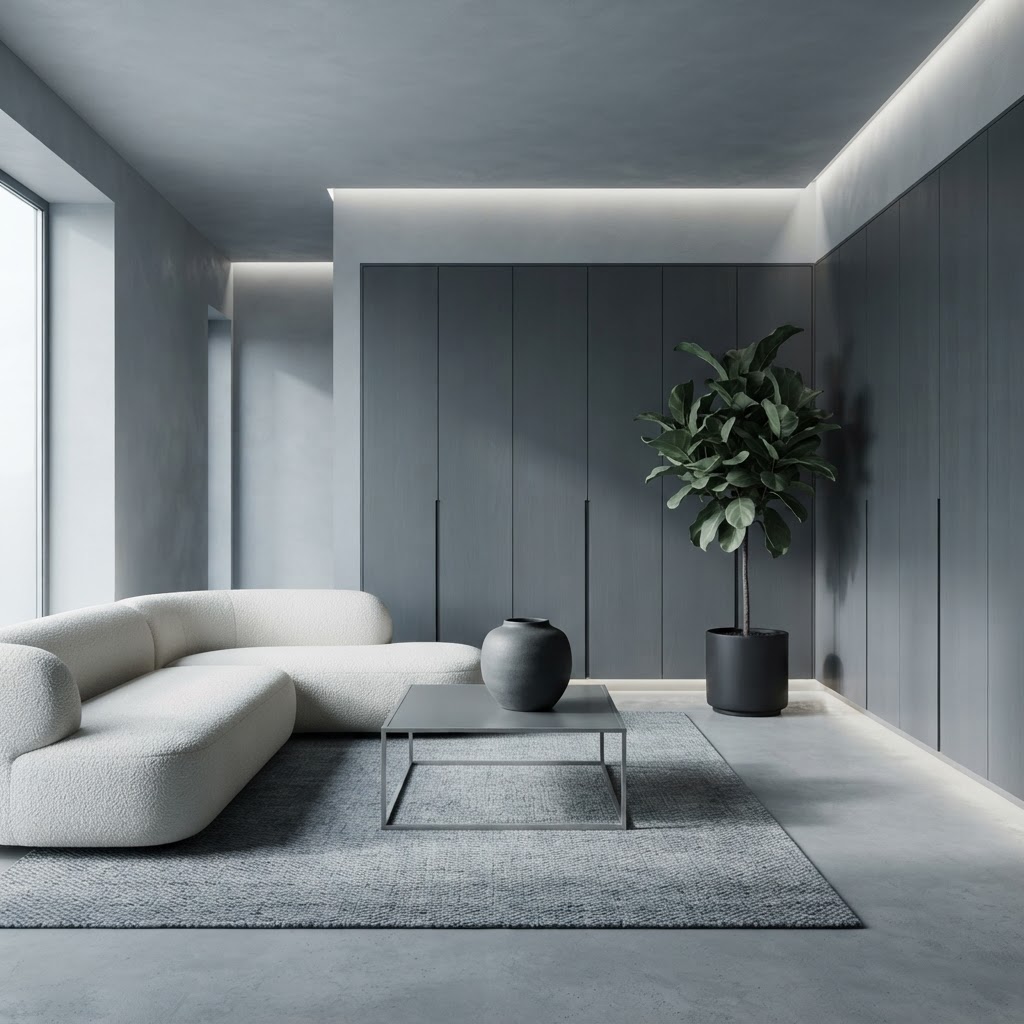
Neo-Minimalism Interior Design
Modern & Minimal
Neo-Minimalism is an ultra-refined design discipline defined by monolithic geometry, a monochromatic palette, and the deliberate pursuit of architectural stillness through total spatial restraint.
What Defines Neo-Minimalism Style?
Born from a reaction against visual saturation, Neo-Minimalism elevates the home to a gallery-like sanctuary where form and function exist in absolute equilibrium. It prizes the intentionality of every void and surface, favoring the quiet power of volume over the noise of ornament. By stripping back the superfluous, the style encourages a profound sensory awareness, allowing light and shadow to act as the primary structural elements. The resulting environment is not merely empty, but rigorously curated to ensure that every object holds its place within a perfectly composed, serene architectural narrative.
Key Characteristics
Architecture
The space is defined by uncompromising architectural lines and a seamless, gallery-like volume that emphasizes clarity of form through concealed storage and clean, structural transitions.
Materials
A curated palette of polished concrete, honed marble, matte metal, and smooth light oak provides a grounding foundation that prioritizes tactile, high-quality, and honest materiality.
Furniture
Low-profile, geometric silhouettes and monolithic forms crafted from wood or metal create a sense of grounded permanence while maintaining the room's pristine and uncluttered rhythm.
Colors
A strictly controlled, monochromatic palette dominated by shades of alabaster, cool stone, slate, and charcoal ensures visual harmony and reinforces the clinical stillness of the interior.
Textiles
Subtle sensory engagement is achieved through the layering of brushed linen and sculptural wool boucle upholstery, which provide necessary softness against the room's harder architectural edges.
Lighting
Hidden perimeter coves and recessed systems eliminate visual clutter, allowing light to define the room’s volume and emphasize clean transitions between vertical and horizontal surfaces.
Decor
Decorative intervention is limited to singular, abstract sculptural statements or a solitary botanical specimen, ensuring that every object serves a purpose within the quiet atmosphere.
Neo-Minimalism Rooms
See how the defining elements of Neo-Minimalism come together in complete interiors.
Look Closer
The materials and details that give Neo-Minimalism its distinctive character.
Signature Pieces
Furniture, lighting and accents that instantly reinforce the Neo-Minimalism look.
See it in Motion
Experience how the space, light and defining details come together in motion.
Neo-Minimalism Color Palette
Neo-Minimalism vs. Similar Styles
Styles can overlap in materials, forms, colors, and architectural details. These comparisons examine the characteristics that distinguish Neo-Minimalism when those signals overlap.
Neo-Minimalism vs. Organic Contemporary
Shared DNA
Defining Difference
Neo-Minimalism pursues a clinical, gallery-like perfection defined by sharp shadows and industrial materials, whereas Organic Contemporary pursues a humanized, warm atmosphere defined by raw textures and biophilic life.
Tie-Breaker
If the space features raw, imperfect textures (like lime-wash or wood grain) alongside warm colors, classify as Organic Contemporary regardless of minimalist furniture; classify as Neo-Minimalism only if the environment is strictly synthetic and cool-toned.
Neo-Minimalism vs. Monochromatic Modern
Shared DNA
Defining Difference
Neo-Minimalism prioritizes clinical, gallery-like architectural purity with hidden storage and high-contrast shadow play, whereas Monochromatic Modern emphasizes atmospheric texture, sculptural warmth, and organic tactile layering within a single-hue environment.
Tie-Breaker
Prioritize the storage method; if storage is integrated and invisible, classify as Neo-Minimalism; if storage is present or sculptural objects are displayed, classify as Monochromatic Modern.
Neo-Minimalism vs. Gallery Modern
Shared DNA
Defining Difference
Neo-Minimalism prioritizes the architecture itself as the art through concealed, monolithic volume, whereas Gallery Modern treats the architecture as a neutral backdrop specifically designed to display external curated artworks.
Tie-Breaker
Prioritize the presence of visible track lighting rails and wall-mounted art as the definitive indicators of Gallery Modern.
What Style Is Your Room?
Upload a room photo to discover its decor style, influences, defining characteristics, color palette, and more.
Analyze My Room