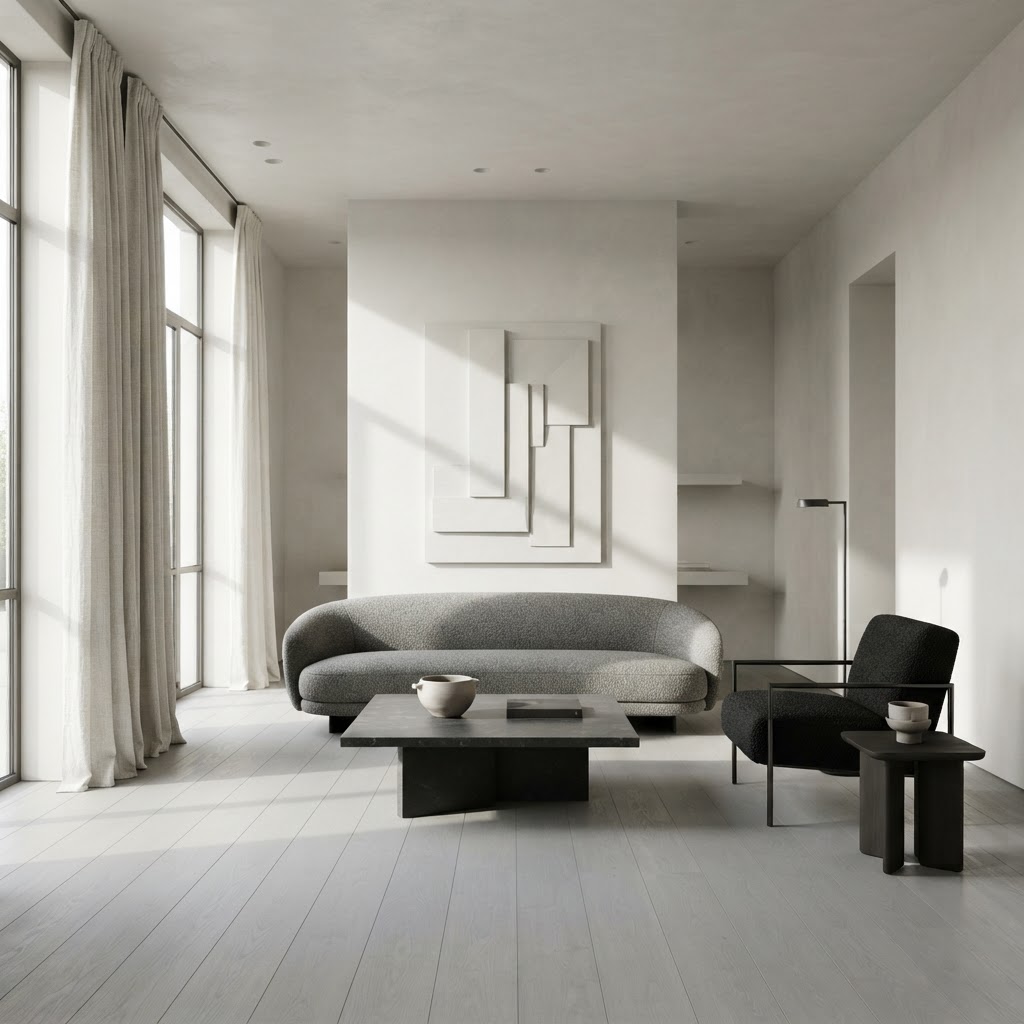
Monochromatic Modern Interior Design
Modern & Minimal
Monochromatic Modern interiors achieve a sense of profound serenity by layering singular tonal palettes with sculptural forms, prioritizing architectural clarity and sophisticated textural depth over traditional chromatic contrast.
What Defines Monochromatic Modern Style?
Rooted in the pursuit of architectural purity, Monochromatic Modern design strips away the superfluous to reveal the essential character of a space. It prizes the interaction between light and shadow, using a restrained palette to elevate simple geometry into a refined, immersive experience. By removing the distraction of color, the focus shifts entirely to the deliberate interplay of materials and the quiet strength of minimalist silhouettes. This approach transforms living environments into contemplative sanctuaries, where quality of form and the intentional curation of every structural element dictate the rhythm and soul of the home.
Key Characteristics
Architecture
The space is defined by clean, sharp wall lines and high ceilings that utilize recessed lighting to create high-contrast structural shadows throughout the minimalist floor plan.
Materials
Designers favor a tactile juxtaposition of raw stone, matte-finished wood, and brushed metal accents to introduce depth and character into the restrained, singular color scheme.
Furniture
Selections prioritize low-profile seating and sculptural silhouettes that serve as functional art, maintaining a minimalist arrangement that emphasizes the intentional use of negative space.
Colors
A rigorous palette composed of shades ranging from off-white and soft grey to charcoal creates a cohesive, atmospheric environment that intentionally avoids all vibrant or distracting color.
Textiles
Heavy linen drapery and nubby wool upholstery provide essential softness, creating a rich sensory experience through varied weave patterns rather than through the use of color.
Lighting
Soft, diffused light is strategically employed to highlight the interplay between smooth plastered surfaces and porous textures, reinforcing the room's serene and atmospheric quality.
Decor
Hand-thrown ceramic vessels and abstract plaster art serve as the final touch, maintaining a minimalist visual framework by emphasizing quality and craftsmanship over excessive ornamentation.
Monochromatic Modern Rooms
See how the defining elements of Monochromatic Modern come together in complete interiors.
Look Closer
The materials and details that give Monochromatic Modern its distinctive character.
Signature Pieces
Furniture, lighting and accents that instantly reinforce the Monochromatic Modern look.
See it in Motion
Experience how the space, light and defining details come together in motion.
Monochromatic Modern Color Palette
Monochromatic Modern vs. Similar Styles
Styles can overlap in materials, forms, colors, and architectural details. These comparisons examine the characteristics that distinguish Monochromatic Modern when those signals overlap.
Monochromatic Modern vs. Neo-Minimalism
Shared DNA
Defining Difference
Neo-Minimalism prioritizes clinical, gallery-like architectural purity with hidden storage and high-contrast shadow play, whereas Monochromatic Modern emphasizes atmospheric texture, sculptural warmth, and organic tactile layering within a single-hue environment.
Tie-Breaker
Prioritize the storage method; if storage is integrated and invisible, classify as Neo-Minimalism; if storage is present or sculptural objects are displayed, classify as Monochromatic Modern.
Monochromatic Modern vs. Organic Contemporary
Shared DNA
Defining Difference
Monochromatic Modern focuses on visual restraint and strict color-matching to achieve high-concept serenity, while Organic Contemporary prioritizes biophilic warmth and raw earth-toned materials to bridge modern architecture with the natural world.
Tie-Breaker
If both styles are present, the presence of lush botanical life or warm-toned materials immediately triggers an Organic Contemporary classification.
What Style Is Your Room?
Upload a room photo to discover its decor style, influences, defining characteristics, color palette, and more.
Analyze My Room