Victorian Interior Design
Traditional
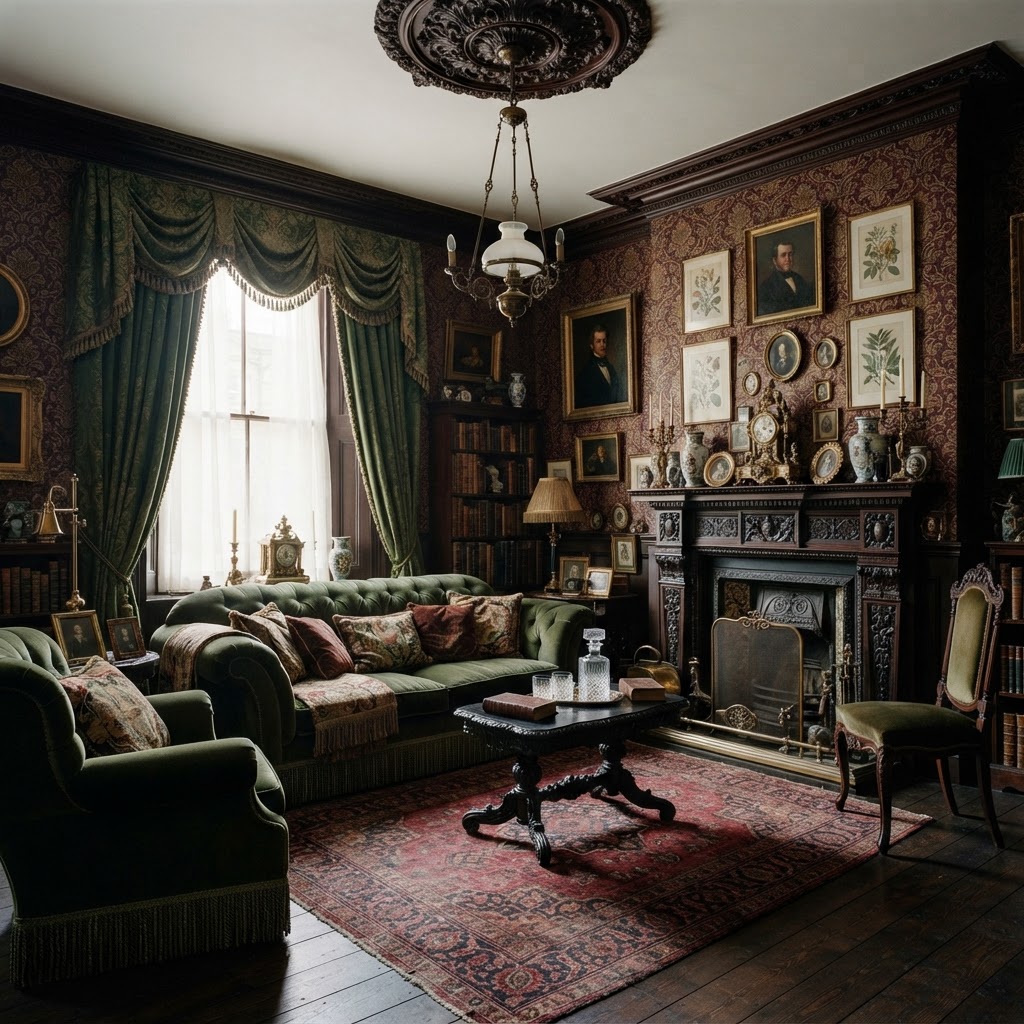
Victorian style is a celebration of architectural complexity and opulent layering, characterized by saturated moods, ornate woodwork, and a curated intensity that evokes historic, sophisticated grandeur.
What Defines Victorian Style?
Born from an era of industrial growth and cultural ambition, the Victorian style prizes a sense of 'horror vacui'—a deliberate, dense layering that turns domestic spaces into personal galleries. It rejects minimalism in favor of a moody, symmetrical elegance where every surface acts as a vessel for history. The philosophy is one of nostalgic indulgence, prioritizing comfort through texture and visual richness. By balancing heavy architectural bones with an accumulation of cherished objects, the style creates a formal, deeply atmospheric environment that feels both protective and profoundly refined, ensuring the home serves as a storied stage for daily life.
Key Characteristics
Architecture
Defined by dense structural complexity, the space centers on intricate crown moldings, carved ceiling medallions, and wainscoting that anchor the room in formal, historic grandeur.
Materials
Authenticity is rooted in heavy, dark-toned mahogany or walnut woods, contrasted by gold-gilded picture frames and the gleam of polished brass accents throughout the room.
Furniture
Heavy, formal silhouettes prioritize deep, tufted velvet upholstery and dark wood pieces featuring elegant cabriole legs and high-backed profiles to define the living area.
Colors
The palette favors deep, moody, and saturated hues such as claret red, forest green, or midnight blue to establish a dramatic sense of depth and formality.
Textiles
Rich layering is achieved through fringed textiles, heavy brocade curtains, and intricate Persian-style rugs that soften the rigid architectural lines while providing comfort underfoot.
Lighting
Light is typically softened and layered to create a dramatic, moody atmosphere, often filtering through heavy drapery to maintain a sense of formal structural symmetry.
Decor
The room features a dense, curated collection of porcelain vases, ornate mantle clocks, and oil-style portraits that reflect an enduring sense of Victorian-era splendor.
Victorian Rooms
See how the defining elements of Victorian come together in complete interiors.
Look Closer
The materials and details that give Victorian its distinctive character.
Signature Pieces
Furniture, lighting and accents that instantly reinforce the Victorian look.
See it in Motion
Experience how the space, light and defining details come together in motion.
Victorian Color Palette
Victorian vs. Similar Styles
Styles can overlap in materials, forms, colors, and architectural details. These comparisons examine the characteristics that distinguish Victorian when those signals overlap.
Victorian vs. Traditional
Shared DNA
Defining Difference
Victorian style prioritizes dense, maximalist layering and historical ornamentation, whereas Traditional style emphasizes refined, curated symmetry and a cleaner, balanced aesthetic.
Tie-Breaker
Prioritize the presence of patterned wallpaper and surface clutter as indicators for Victorian, while prioritizing symmetrical layout and neutral wall colors for Traditional.
What Style Is Your Room?
Upload a room photo to discover its decor style, influences, defining characteristics, color palette, and more.
Analyze My Room