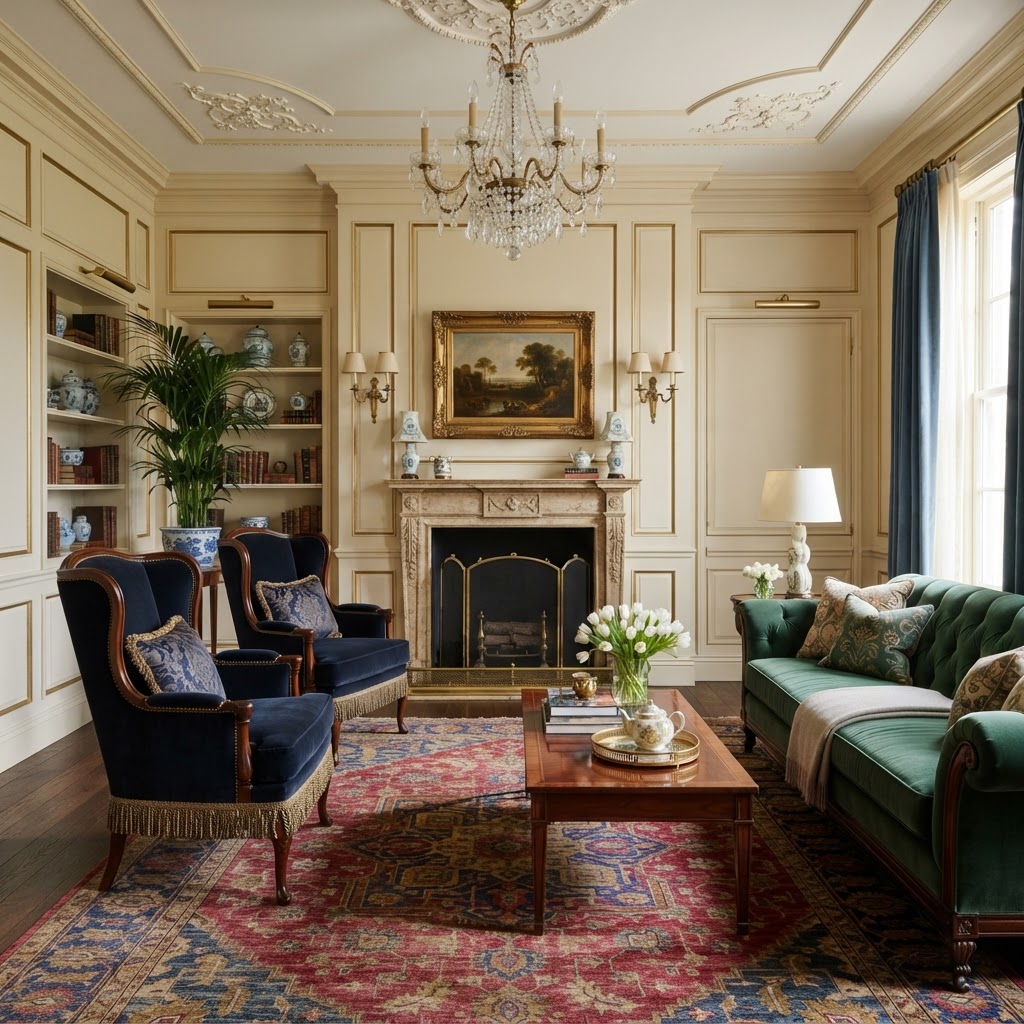
Traditional Interior Design
Traditional
Traditional design is defined by formal symmetry, architectural refinement, and a curated selection of historical silhouettes that prioritize timeless elegance over transient trends.
What Defines Traditional Style?
Rooted in the classic aesthetic traditions of the past, Traditional design draws heavily from historical precedents and the disciplined organization of formal spaces. It prizes order, symmetry, and a balanced composition that suggests continuity and heritage. Rather than chasing the ephemeral nature of modern fads, the style celebrates structural integrity and the lasting appeal of rich wood, artisanal textiles, and period-appropriate detailing. The ultimate intent is to create a home that feels intentionally assembled and profoundly stable, where every element contributes to a sense of quiet, sophisticated permanence.
Key Characteristics
Architecture
Defined by structural rigor, the space utilizes deep-paneled walls, intricate wainscoting, and precise crown molding to establish an atmosphere of formal architectural symmetry.
Materials
The foundation rests upon high-quality dark woods like mahogany or cherry, complemented by the warmth of polished brass hardware and the refined presence of heirloom ceramics.
Furniture
Furniture silhouettes emphasize classic forms, featuring elegant cabriole legs, stately high-backed wing chairs, and button-tufted upholstery that grounds the room in historical design language.
Colors
The palette maintains a sophisticated balance, pairing neutral cream foundations with deep, saturated jewel tones to create a sense of grounded, visual depth.
Textiles
Rich layering is achieved through complex textures, including damask patterns and plush velvet cushions, all anchored by the historical narrative of authentic Persian-style rugs.
Lighting
Illumination is provided by ornate crystal chandeliers and classic brass wall sconces, which together cast a warm, steady, and inviting glow across the structured environment.
Decor
Carefully curated accents such as antique gilded frames, heirloom ceramics, and traditional oil-based artwork are displayed in thoughtful arrangements that enhance the room's timeless narrative.
Traditional Rooms
See how the defining elements of Traditional come together in complete interiors.
Look Closer
The materials and details that give Traditional its distinctive character.
Signature Pieces
Furniture, lighting and accents that instantly reinforce the Traditional look.
See it in Motion
Experience how the space, light and defining details come together in motion.
Traditional Color Palette
Traditional vs. Similar Styles
Styles can overlap in materials, forms, colors, and architectural details. These comparisons examine the characteristics that distinguish Traditional when those signals overlap.
Traditional vs. Georgian
Shared DNA
Defining Difference
Georgian is defined by rigid, academic adherence to 18th-century architectural proportions and muted, light-reflective palettes, whereas Traditional is a looser, more eclectic evolution that prioritizes warm, saturated comfort and heavier, more ornate comfort-focused upholstery.
Tie-Breaker
Prioritize the color palette and upholstery style; if the space uses jewel tones and tufted furniture, it is definitively Traditional, even if the architecture is highly symmetrical.
Traditional vs. American Traditional
Shared DNA
Defining Difference
American Traditional prioritizes a softer, lived-in family comfort with a muted neutral palette, whereas Traditional prioritizes a formal, curated sense of historical gravitas often enhanced by deeper jewel tones and a more rigid, uncluttered environment.
Tie-Breaker
Prioritize the saturation of the color palette; muted neutrals confirm American Traditional, while deep jewel tones confirm Traditional.
Traditional vs. Victorian
Shared DNA
Defining Difference
Victorian style prioritizes dense, maximalist layering and historical ornamentation, whereas Traditional style emphasizes refined, curated symmetry and a cleaner, balanced aesthetic.
Tie-Breaker
Prioritize the presence of patterned wallpaper and surface clutter as indicators for Victorian, while prioritizing symmetrical layout and neutral wall colors for Traditional.
What Style Is Your Room?
Upload a room photo to discover its decor style, influences, defining characteristics, color palette, and more.
Analyze My Room