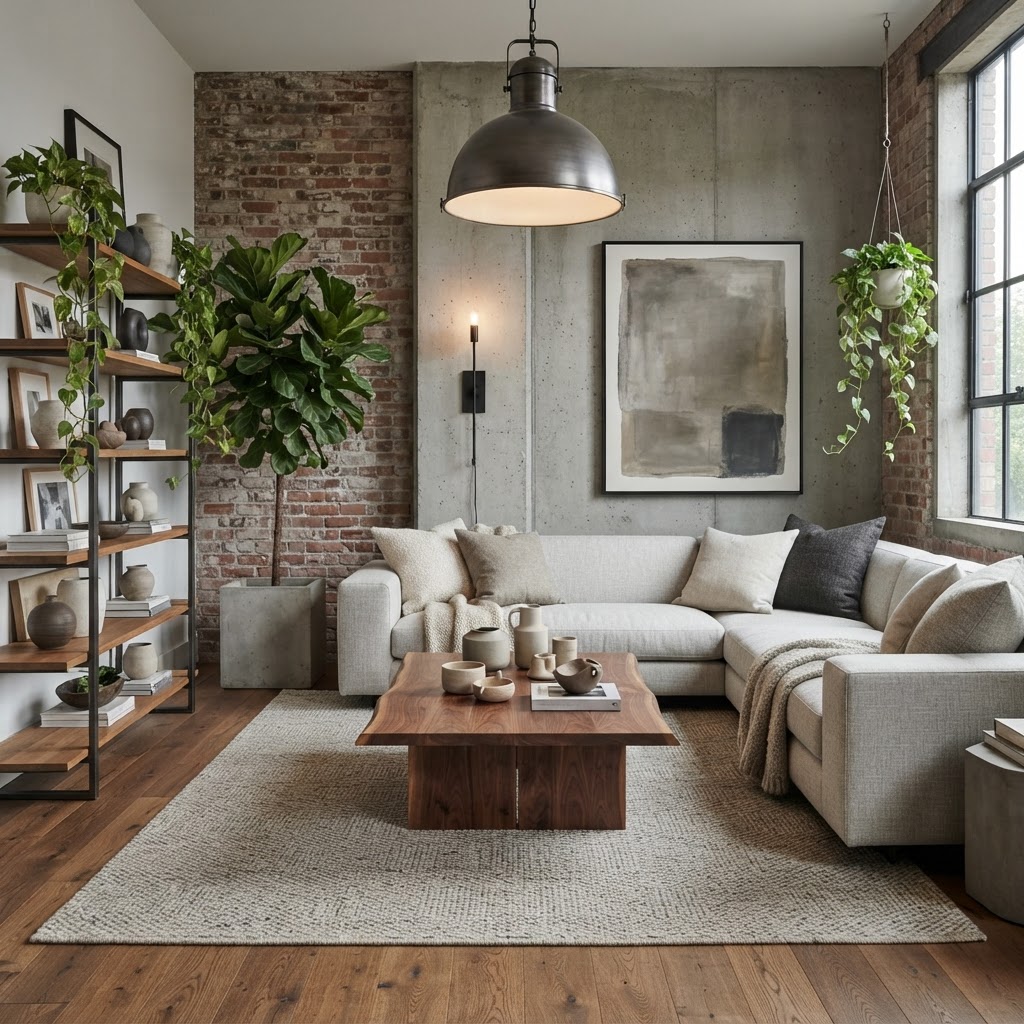
Soft Industrial Interior Design
Eclectic & Bold
Soft Industrial design marries the raw, structural integrity of urban architecture with the refined, tactile comfort of warm organic materials for a sanctuary that is both grounded and inviting.
What Defines Soft Industrial Style?
Soft Industrial emerges from the evolution of the warehouse loft, stripping away the harshness of traditional urban aesthetics in favor of a more temperate, livable approach. It prioritizes the honesty of exposed structures like brick and concrete while tempering them with the gentle warmth of natural timber and soft textiles. This style seeks to balance the cold precision of industrial metalwork with a serene, human-centric atmosphere. By emphasizing comfort and organic vitality, Soft Industrial transforms structural shells into relaxed, sophisticated homes that value deliberate, tactile layering over rigid industrial uniformity.
Key Characteristics
Architecture
The foundation rests on the raw honesty of exposed surfaces, utilizing weathered brick and smooth concrete to provide a grounded, structural canvas for the home.
Materials
A refined interplay between cool metallic finishes and the inviting warmth of natural wide-plank oak flooring creates a sophisticated, balanced material narrative throughout the space.
Furniture
Low-profile, contemporary silhouettes with clean lines offer a minimalist structure that prioritizes comfort through plush, deep-seated sectional arrangements rather than cold, traditional industrial leather.
Colors
A restrained, muted palette of putty, charcoal, and stone provides an understated backdrop that allows the richer tones of natural wood and clay to resonate.
Textiles
Tactile layering is essential, incorporating nubby wool throws and oversized linen cushions to introduce a sense of relaxed sophistication against the rigidity of industrial shelving.
Lighting
Diffused, layered illumination emanates from oversized matte metallic pendants and minimalist wall sconces to create an atmosphere that feels both structurally honest and intentionally warm.
Decor
Abundant indoor greenery and hand-thrown ceramic vessels soften sharp architectural edges, effectively blurring the line between the built environment and the organic world.
Soft Industrial Rooms
See how the defining elements of Soft Industrial come together in complete interiors.
Look Closer
The materials and details that give Soft Industrial its distinctive character.
Signature Pieces
Furniture, lighting and accents that instantly reinforce the Soft Industrial look.
See it in Motion
Experience how the space, light and defining details come together in motion.
Soft Industrial Color Palette
Soft Industrial vs. Similar Styles
Styles can overlap in materials, forms, colors, and architectural details. These comparisons examine the characteristics that distinguish Soft Industrial when those signals overlap.
Soft Industrial vs. Industrial Loft
Shared DNA
Defining Difference
Soft Industrial prioritizes a curated, cozy domestic sanctuary through organic softness, while Industrial Loft prioritizes the raw, unrefined aesthetic of a working warehouse.
Tie-Breaker
If the space features a mix of soft textiles and raw architecture, classify based on the flooring material: wood indicates Soft Industrial, while raw concrete indicates Industrial Loft.
Soft Industrial vs. Organic Contemporary
Shared DNA
Defining Difference
Soft Industrial is rooted in the gritty, structural honesty of urban materials like raw metal and exposed brick, whereas Organic Contemporary prioritizes high-end, smooth, and refined finishes like travertine, plaster, and light oak.
Tie-Breaker
Prioritize the architectural backdrop: if raw, heavy structural elements are the focal point, classify as Soft Industrial; if smooth, refined wall textures dominate, classify as Organic Contemporary.
Soft Industrial vs. Industrial Farmhouse
Shared DNA
Defining Difference
Soft Industrial prioritizes a serene, contemporary, and plush-upholstered atmosphere, while Industrial Farmhouse centers on a rugged, high-contrast, and vintage-utility aesthetic.
Tie-Breaker
Prioritize the primary furniture upholstery material: leather and heavy-duty textiles indicate Industrial Farmhouse, while linen and soft cotton upholstery indicate Soft Industrial.
What Style Is Your Room?
Upload a room photo to discover its decor style, influences, defining characteristics, color palette, and more.
Analyze My Room