Shabby Chic Interior Design
Traditional
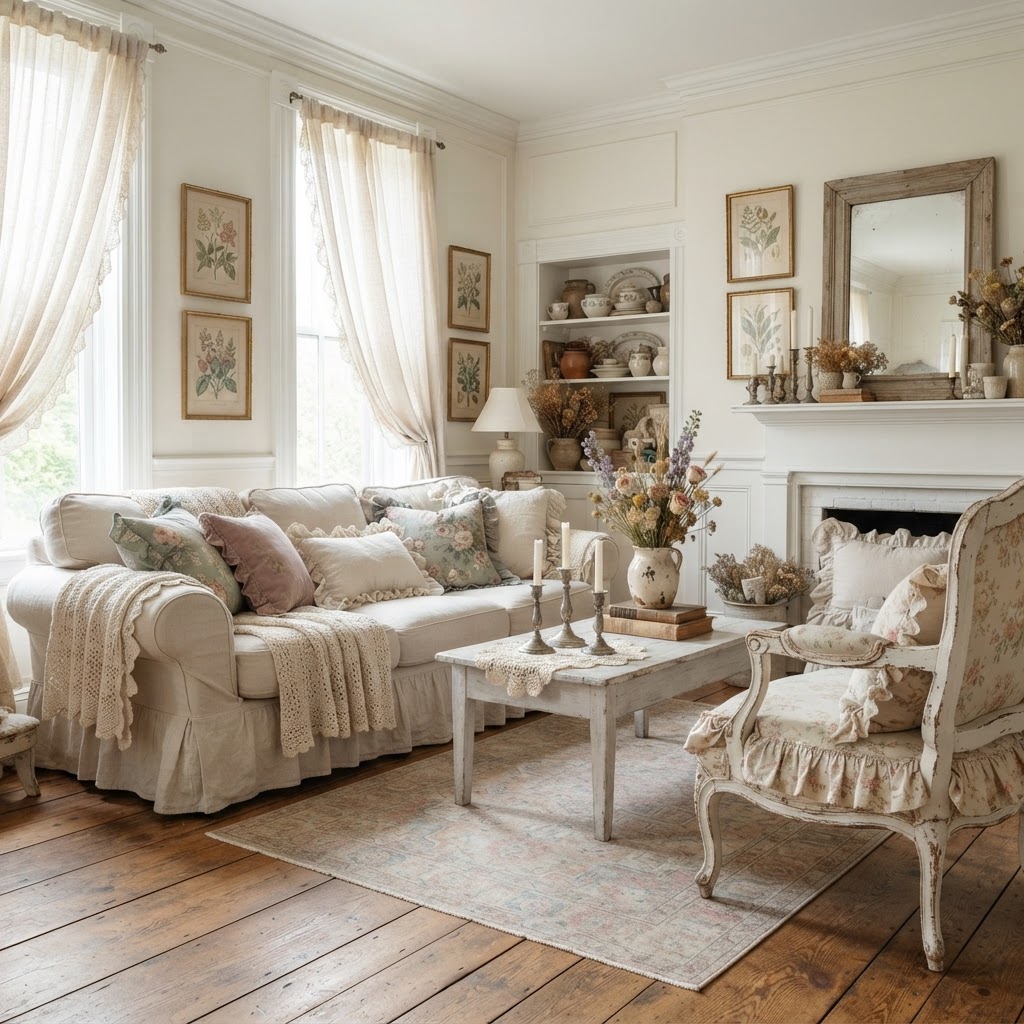
Shabby Chic is a romantic, design-forward aesthetic defined by the graceful interplay of weathered vintage furniture, soft pastel palettes, and the cozy, layered elegance of ruffled textiles.
What Defines Shabby Chic Style?
Born from a desire to celebrate the beauty of imperfection, Shabby Chic elevates the timeworn and the antique into a cohesive, breathable sanctuary. It draws inspiration from the informal charm of country living, prizing evidence of age as a marker of history and comfort. This philosophy rejects the sterile in favor of the lived-in, prioritizing romantic softness and deliberate layering over modern rigidity. By curating weathered wood and delicate florals, the style transforms functional spaces into serene, light-filled havens that feel both intimately personal and effortlessly gathered over many years.
Key Characteristics
Architecture
Spaces are anchored by white-painted architectural molding and reclaimed wood flooring, creating a structural canvas that feels high-ceilinged, airy, and gently illuminated.
Materials
The palette relies on authentic, aged materials like distressed wood, tarnished silver, and weathered surfaces that showcase the honest, tactile story of their passing years.
Furniture
Furniture silhouettes prioritize vintage comfort, featuring ornate wooden pieces with antique paint finishes and deeply cozy, slipcovered seating that invites one to linger.
Colors
A delicate, muted palette of dusty rose, sage green, and creamy off-white creates a light-filled atmosphere that emphasizes the gentle and romantic lines of the space.
Textiles
Surfaces are layered with an abundance of ruffled linen, crochet accents, and intricate vintage floral patterns to evoke a sense of soft, nostalgic comfort.
Lighting
Natural sunlight filters through sheer, layered window treatments, washing the room in a soft, diffused glow that highlights the delicate flourishes of the interior.
Decor
Personalized collections of faded botanical art, chipped ceramic vases, and weathered vintage mirrors provide the final layer of curated, lived-in elegance.
Shabby Chic Rooms
See how the defining elements of Shabby Chic come together in complete interiors.
Look Closer
The materials and details that give Shabby Chic its distinctive character.
Signature Pieces
Furniture, lighting and accents that instantly reinforce the Shabby Chic look.
See it in Motion
Experience how the space, light and defining details come together in motion.
Shabby Chic Color Palette
Shabby Chic vs. Similar Styles
Styles can overlap in materials, forms, colors, and architectural details. These comparisons examine the characteristics that distinguish Shabby Chic when those signals overlap.
Shabby Chic vs. French Country
Shared DNA
Defining Difference
Shabby Chic prioritizes a feminine, romantic, and whimsical aesthetic focused on light colors and soft ruffles, whereas French Country emphasizes a grounded, rustic sophistication centered on historical architectural bones and traditional Provencal textiles.
Tie-Breaker
Prioritize the presence of Toile de Jouy or exposed ceiling beams as primary indicators for French Country over the general distressed-white aesthetic of Shabby Chic.
Shabby Chic vs. English Cottage
Shared DNA
Defining Difference
Shabby Chic prioritizes a monochromatic, ethereal, and airy romanticism with light-weight fabrics, whereas English Cottage prioritizes a grounded, traditional warmth with heavier textiles, botanical chintz, and historical architectural density.
Tie-Breaker
Prioritize the presence of a stone or brick hearth and heavy chintz florals to classify as English Cottage; prioritize the presence of lace, ruffles, and heavy paint-distressing to classify as Shabby Chic.
What Style Is Your Room?
Upload a room photo to discover its decor style, influences, defining characteristics, color palette, and more.
Analyze My Room