Retro 70s Interior Design
Eclectic & Bold
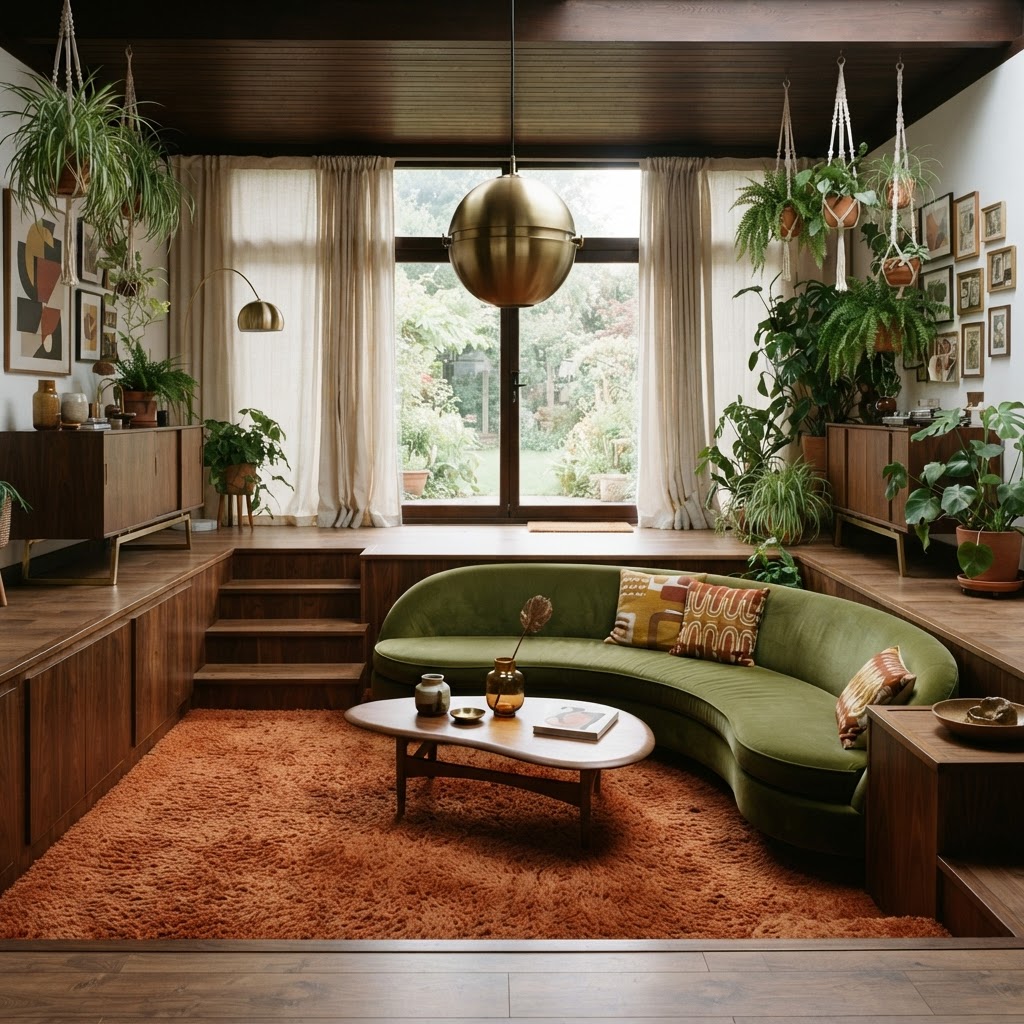
Retro 70s interiors embrace organic curves, tactile warmth, and an earthy color palette to cultivate a soulful, laid-back atmosphere rooted in the experimental spirit of the decade.
What Defines Retro 70s Style?
Retro 70s design emerged as a bold, expressive departure from mid-century minimalism, favoring a more relaxed and communal way of living. It prizes an intentional layering of textures and eclectic artifacts that tell a personal story of comfort and nostalgia. By prioritizing sunken conversation pits and plush, organic silhouettes, the style transforms spaces into intimate sanctuaries for gathering. The philosophy centers on an authentic, lived-in warmth, blending architectural interest with deep, saturated tones to create an environment that feels both sophisticated and genuinely unpretentious.
Key Characteristics
Architecture
Structural interest is anchored by sunken conversation pits, floor-to-ceiling windows, and rich, dark-toned walnut wood paneling that defines the depth and character of the space.
Materials
The aesthetic relies on the combination of rich walnut woods, polished brass accents, hand-thrown ceramic stoneware, and tinted glass to provide a layered, textural foundation.
Furniture
Design centers on fluid, organic silhouettes featuring low-slung profiles and curved edges that promote comfort while honoring the era's commitment to soft, sculptural forms.
Colors
An earthy trinity of burnt orange, deep avocado green, and mustard yellow serves as the palette anchor against muted, warm neutral walls to establish a cohesive retro mood.
Textiles
Sensory comfort is achieved through thick, high-pile shag carpets and plush velvet upholstery, which add depth and warmth to the living environment.
Lighting
Atmosphere is crafted via soft, diffused light emanating from sculptural globe pendants and mushroom-shaped table lamps that cast a gentle, hazy glow across the room.
Decor
Spaces are completed with eclectic collections of oversized trailing houseplants, abstract geometric wall art, and patterned throw pillows featuring bold, rhythmic motifs.
Retro 70s Rooms
See how the defining elements of Retro 70s come together in complete interiors.
Look Closer
The materials and details that give Retro 70s its distinctive character.
Signature Pieces
Furniture, lighting and accents that instantly reinforce the Retro 70s look.
See it in Motion
Experience how the space, light and defining details come together in motion.
Retro 70s Color Palette
Retro 70s vs. Similar Styles
Styles can overlap in materials, forms, colors, and architectural details. These comparisons examine the characteristics that distinguish Retro 70s when those signals overlap.
Retro 70s vs. Retro 90s
Shared DNA
Defining Difference
Retro 90s relies on bulky, overstuffed comfort with light honey oak finishes, whereas Retro 70s prioritizes low-slung, curvaceous forms with dark walnut tones and high-pile textures.
Tie-Breaker
Prioritize the wood finish and furniture silhouette; honey oak/overstuffed dictates Retro 90s, while walnut/curved silhouettes dictate Retro 70s.
What Style Is Your Room?
Upload a room photo to discover its decor style, influences, defining characteristics, color palette, and more.
Analyze My Room