Provence Interior Design
Traditional
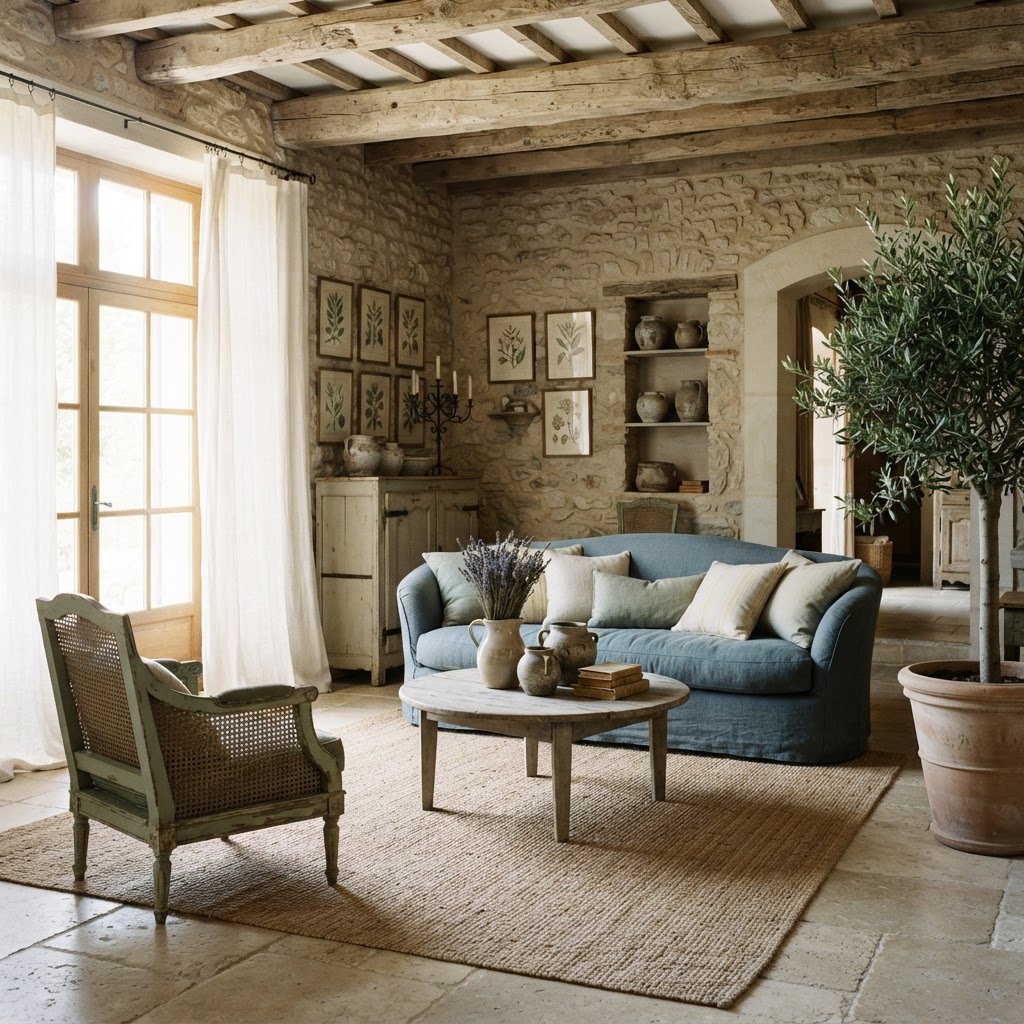
Provence interior design captures the sun-drenched, pastoral elegance of rural southern France through a refined blend of rustic architecture, weathered textures, and a soft, muted Mediterranean color palette.
What Defines Provence Style?
Born from the quiet, rhythmic traditions of Mediterranean life, the Provence style prioritizes an enduring connection to the landscape over contemporary polish. Its philosophy celebrates the patina of age, honoring the history found in rough-hewn stone and paint-distressed wood. By embracing a slow-paced, atmospheric grace, these interiors feel as if they have been curated over generations rather than designed in an instant. The intent is to craft a sanctuary where every textured layer and organic detail suggests a life lived well under the warm, hazy glow of the southern sun.
Key Characteristics
Architecture
The structural foundation relies on authentic, grounded elements such as exposed wooden ceiling beams, sturdy rough-hewn stone walls, and characteristic arched passage openings.
Materials
Designers prioritize tactile, raw textures including cool limestone or flagstone flooring, weathered wood finishes, and iron accents that provide a sense of timeless weight.
Furniture
Furniture silhouettes favor elegant, curved wooden pieces treated with gently distressed or chalky paint finishes that exude a soft, historical charm.
Colors
The palette is defined by sun-bleached neutrals, warm whites, and specific Mediterranean accents like lavender, sea blue, and soft olive green.
Textiles
Natural, lightweight cottons and heavy linen upholstery in subtle stripes or delicate floral patterns create an airy yet comfortable sense of pastoral refinement.
Lighting
Oversized windows act as the primary light source, bathing the interior in a hazy, ethereal glow that softens the room’s structural lines and details.
Decor
Organic connections are maintained through dried lavender bundles, potted olive trees, and collections of weathered ceramic pitchers displayed against botanical wall art.
Provence Rooms
See how the defining elements of Provence come together in complete interiors.
Look Closer
The materials and details that give Provence its distinctive character.
Signature Pieces
Furniture, lighting and accents that instantly reinforce the Provence look.
See it in Motion
Experience how the space, light and defining details come together in motion.
Provence Color Palette
Provence vs. Similar Styles
Styles can overlap in materials, forms, colors, and architectural details. These comparisons examine the characteristics that distinguish Provence when those signals overlap.
Provence vs. Tuscan
Shared DNA
Defining Difference
Tuscan design is defined by heavy, dark, and rugged Italianate warmth, whereas Provence design relies on airy, sun-bleached, and refined French provincial delicacy.
Tie-Breaker
Prioritize the furniture finish: unpainted, dark, rustic wood dictates Tuscan, whereas distressed, painted, or pastel wood dictates Provence.
Provence vs. French Country
Shared DNA
Defining Difference
Style A (Provence) centers on a sun-drenched, pastoral outdoor-in lifestyle defined by vibrant Mediterranean colors and raw organic textures, whereas Style B (French Country) centers on formal, aristocratic domesticity defined by sophisticated curves and legacy textile patterns like Toile de Jouy.
Tie-Breaker
If both styles appear, categorize as Style B if Toile de Jouy or ornate brass hardware is present; otherwise, default to Style A if bright yellow or rustic stone architecture dominates.
What Style Is Your Room?
Upload a room photo to discover its decor style, influences, defining characteristics, color palette, and more.
Analyze My Room