Modern Colonial Interior Design
Traditional
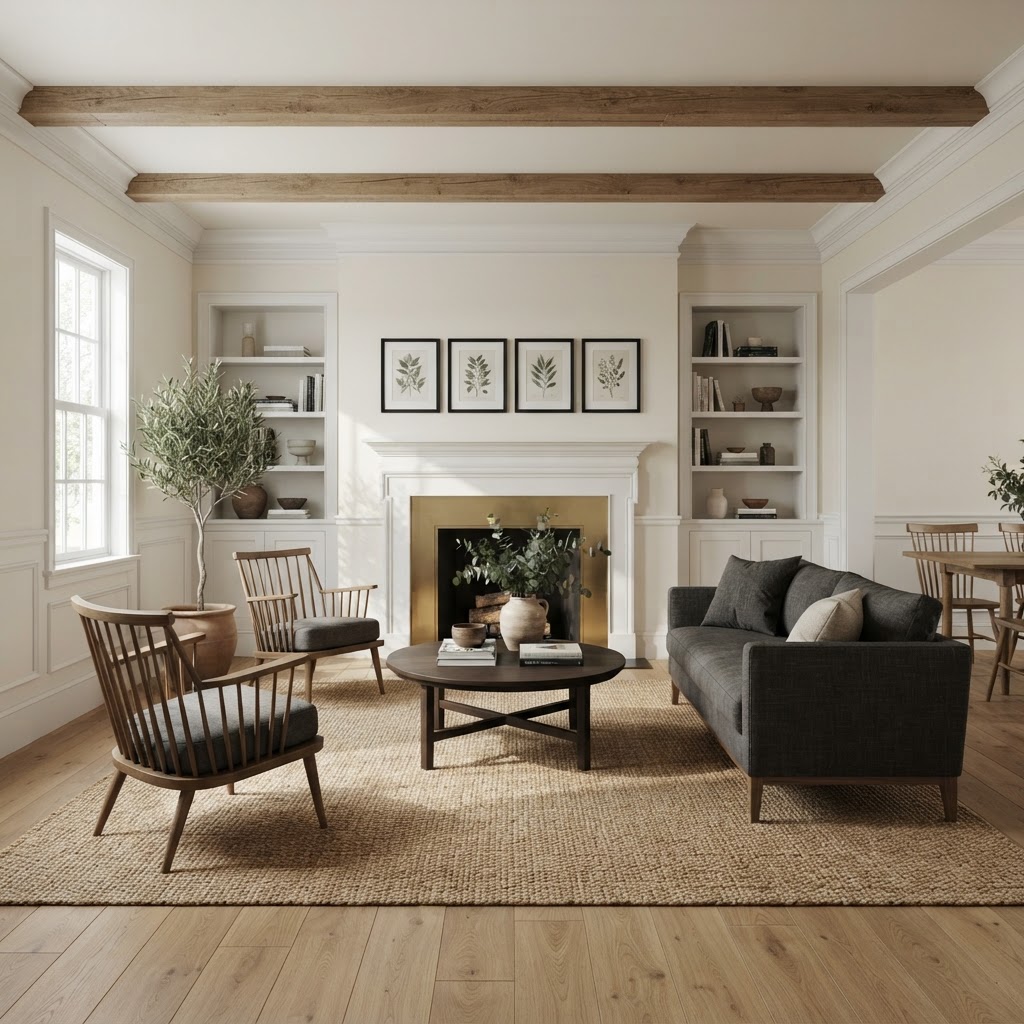
Modern Colonial interiors harmonize the rigorous symmetry and historic craftsmanship of traditional colonial architecture with the clean, intentional comfort of contemporary design.
What Defines Modern Colonial Style?
Modern Colonial design is rooted in the quiet confidence of eighteenth-century proportions, adapted for the refined needs of the modern home. It celebrates a dialogue between the formal heritage of crisp millwork and crown molding, and a minimalist sensibility that strips away the superfluous. The aesthetic prizes architectural integrity, favoring a high-contrast neutral palette that allows the structural geometry of the room to take center stage. By anchoring spaces with traditional wainscoting and warm, natural timber, the style achieves an atmosphere of intellectual calm, proving that historical gravity and clutter-free comfort can exist in perfect, symmetrical tension.
Key Characteristics
Architecture
The space relies on a foundation of rigorous symmetry, defined by crisp white millwork, historic crown molding profiles, and wainscoting that anchors the room with traditional precision.
Materials
Organic textures like jute, hand-thrown ceramics, and warm, honey-toned oak flooring offer a deliberate, tactile contrast to the polished, smooth surfaces of the architectural millwork.
Furniture
Silhouettes bridge the eighteenth century and today, combining the graceful lines of spindle-backed Windsor chairs with clean-lined frames and structured, minimalist upholstered pieces.
Colors
The palette remains sophisticated and high-contrast, pairing warm off-white walls with charcoal and black accents to highlight the home's intentional geometry and structural depth.
Textiles
Textiles are kept understated and structured, utilizing natural linens in muted, neutral tones that reinforce the calm, curated environment without introducing unnecessary visual noise.
Lighting
Natural light is welcomed through multi-pane sash windows, casting clean, linear shadows that emphasize the architectural geometry and the refined warmth of the timber beams.
Decor
Artistic choices focus on minimalist botanical prints or monochromatic sketches in slim black frames, complemented by sculptural greenery like olive trees to breathe life into the space.
Modern Colonial Rooms
See how the defining elements of Modern Colonial come together in complete interiors.
Look Closer
The materials and details that give Modern Colonial its distinctive character.
Signature Pieces
Furniture, lighting and accents that instantly reinforce the Modern Colonial look.
See it in Motion
Experience how the space, light and defining details come together in motion.
Modern Colonial Color Palette
Modern Colonial vs. Similar Styles
Styles can overlap in materials, forms, colors, and architectural details. These comparisons examine the characteristics that distinguish Modern Colonial when those signals overlap.
Modern Colonial vs. Rustic Contemporary
Shared DNA
Defining Difference
Modern Colonial uses traditional architecture and historical motifs as its base, whereas Rustic Contemporary uses modern architecture as a canvas for raw, organic, and weathered textures.
Tie-Breaker
Prioritize the architectural backdrop; if the wall treatments are historical (molding, wainscoting) choose Modern Colonial, but if the ceiling features heavy structural timber, choose Rustic Contemporary.
Modern Colonial vs. Transitional
Shared DNA
Defining Difference
Modern Colonial prioritizes specific historical heritage motifs and period-accurate architecture, while Transitional prioritizes a fluid, comfort-driven mix of contemporary profiles and traditional forms.
Tie-Breaker
Prioritize the provenance of the furniture silhouettes; if the furniture is clearly rooted in a specific historical style (Colonial), classify as Modern Colonial regardless of neutral colors.
What Style Is Your Room?
Upload a room photo to discover its decor style, influences, defining characteristics, color palette, and more.
Analyze My Room